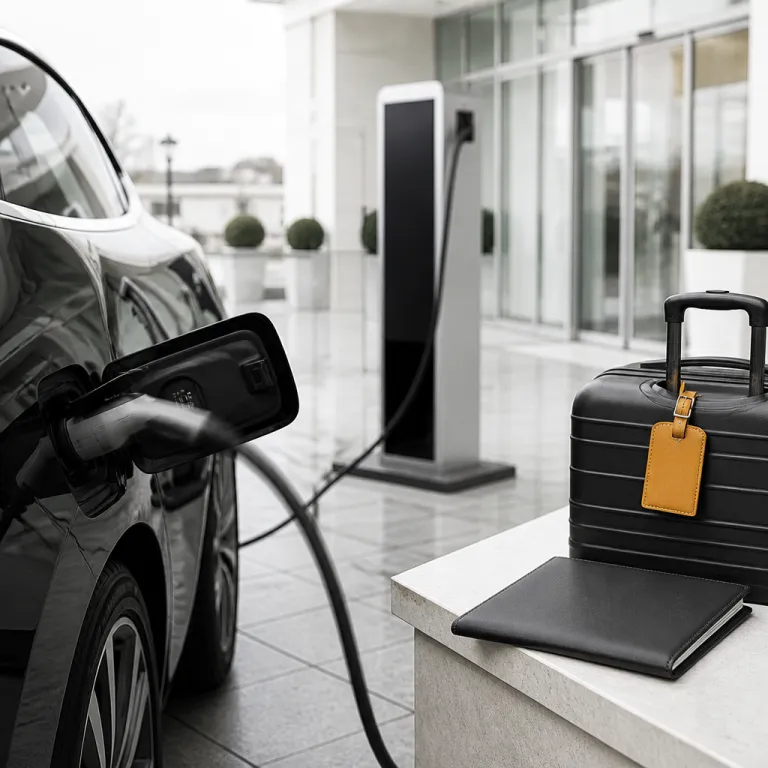
Why EV charging now decides who wins the corporate travel contract
Corporate travel managers are quietly rewriting their playbooks, and EV charging now sits beside Wi-Fi and meeting rooms on every serious request for proposal. For any corporate travel hotel EV charging business strategy, the question is no longer whether a hotel offers a charger but how reliable the charging stations are, how many electric vehicles can plug in at once, and how clearly the service is framed in the contract. For EV driving executives, the right hotels turn vehicle charging from a stressful detour into a seamless part of the hospitality experience.
Procurement teams now ask for precise data on the number of chargers, the mix of level chargers, and whether a charging station is reserved for corporate guests or shared with public vehicles. They want to know if the hotel charging offer includes overnight destination charging, daytime fast charging for back to back meetings, and clear energy pricing that fits expense policies. In this new environment, hotels hospitality leaders who treat charging infrastructure as core business equipment, not a side amenity, are the ones winning multi year contracts.
Chains such as IHG Hotels & Resorts, Daly Seven, and Trimark Hospitality Group have moved early, partnering with EnviroSpark, EVPassport, and EV+ to scale hotel charging across hospitality properties in the United States and Canada. Their commercial charging programmes give corporate clients confidence that a stations hotel portfolio can support growing fleets of electric vehicles without last minute improvisation. For travel managers comparing stations hotels, the presence of a mature charging hotel programme often outweighs marginal differences in room rate or meeting room size.
How EV driving executives actually charge on the road
For the business guest arriving in an electric vehicle after a late flight, the priority is simple ; plug in once, sleep, and wake up with a full battery and a clear schedule. That means the corporate travel hotel EV charging business must guarantee that at least one charger is available, that the charging station is easy to find, and that the hotel team understands basic support if something goes wrong. When 48 percent of EV drivers say they are unwilling to stay without chargers, the guest experience around charging becomes as critical as the mattress or the breakfast.
Most corporate drivers prefer level charging overnight, using 11 to 22 kilowatt level chargers that gently restore energy while they rest, rather than hunting for public fast charging on the edge of town. For early morning meetings, a few DC fast charging options on site can be invaluable, especially when the station is integrated with hotel management systems for simple billing and reporting. Articles on the guest experience with DC fast chargers in city properties, such as analyses of what happens when a city hotel installs DC fast chargers, show how dramatically a well designed charging infrastructure can reshape both guest flow and ancillary revenue.
Executives also need clarity on how the charge will appear on their expense reports, whether the hotel charging fee is bundled into the room rate, and how the business can reclaim costs for multiple vehicles on one account. The best charging hotels now provide itemised receipts that separate vehicle charging from accommodation, making life easier for both the guest and the corporate finance équipe. When a stations hotel portfolio can promise consistent charging stations and transparent pricing, travel managers are far more willing to shift volume away from legacy properties that still treat EVs as an exception.
From green badge to hard business asset in hospitality
What once looked like a sustainability flourish has become a hard edged commercial advantage in the corporate travel hotel EV charging business. Travel buyers now benchmark hotels charging capabilities with the same rigour they apply to meeting room capacities or Wi-Fi bandwidth, and they expect hospitality properties to speak fluently about kilowatts, connector types, and uptime. The hotels that win are those that treat every charger and every charging station as revenue generating infrastructure, not a marketing prop.
IHG Hotels & Resorts, for example, has publicly committed to scaling electric vehicle chargers across its U.S. and Canadian portfolio through a partnership with EnviroSpark, while Daly Seven has deployed more than one hundred chargers across dozens of hotels through EVPassport. Trimark Hospitality Group is rolling out electric vehicle charging in multiple states with EV+, signalling that installing charging is now a board level decision, not a side project. These moves give corporate clients confidence that a single stations hotels agreement can support hundreds of electric vehicles across multiple cities without piecemeal negotiations.
For individual properties, the shift is equally strategic ; a charging hotel that can guarantee a reserved charger for top tier loyalty members or key account travellers suddenly has a new lever in rate negotiations. Location decisions about where to place chargers on site also matter, as shown by detailed reviews of where city hotels actually put their EV chargers, from garage to valet bay to curbside. When a hotel aligns its charging infrastructure with valet operations, security, and guest flow, the result is a coherent hospitality service that feels premium rather than improvised.
What corporate RFPs now ask about EV charging
Corporate travel buyers have become surprisingly specific in their EV related questions, and any serious corporate travel hotel EV charging business must be ready with precise answers. RFPs now request the exact number of chargers, the split between AC level chargers and DC fast charging units, and whether each charging station is open to the public or reserved for hotel guests. They also ask whether the hotel uses a managed platform that can generate monthly usage reports by vehicle, by guest, and by account.
Questions extend beyond hardware into operations, including how the hotel manages access to charging stations during peak occupancy and what support is available if a charger fails overnight. Travel managers want to know whether the hotel has clear policies for moving vehicles once the charge is complete, how long a guest can remain connected, and whether staff are trained to handle basic troubleshooting. For fleets of electric vehicles, the ability to pre book a station and receive confirmation at the time of room reservation is often the difference between choosing one hotel or another.
Some RFPs now treat hotel charging as a bundled service, asking for inclusive rates that cover both accommodation and vehicle charging for a set number of nights per month. Others prefer pay per use models, but still require transparent energy pricing and integration with corporate payment tools. In both cases, hotels hospitality teams that can articulate a clear charging infrastructure strategy, backed by data from their management systems, consistently outperform competitors that simply list “EV charger available” in a footnote.
How managed platforms turn chargers into corporate grade services
Behind the scenes, the most competitive corporate travel hotel EV charging business models rely on managed platforms that treat every charger as a connected asset. These systems monitor each charging station in real time, track energy delivered to every electric vehicle, and alert staff if a unit goes offline before a key guest arrives. For travel managers, the value lies in consolidated reporting that shows exactly how their travellers use charging hotels across a regional or global programme.
When a hotel integrates its charging infrastructure with its property management system, it can automatically link a vehicle charging session to a specific room, company, and cost centre. That means a guest can plug into a station, start the charge via app or room key, and see the service appear on their folio with the same clarity as a room service order. Over time, these data allow hotels hospitality leaders to understand peak demand periods, justify installing charging capacity where it is most needed, and negotiate smarter commercial charging agreements with technology partners.
For corporate clients, managed platforms also unlock policy control, such as limiting fast charging sessions to a set number of kilowatt hours per stay or prioritising destination charging overnight for long haul travellers. Some programmes even differentiate between personal and business vehicles, ensuring that only authorised vehicle charging sessions are billed back to the company. In this context, a charging hotel is no longer just a place with plugs ; it becomes a finely tuned energy and service hub that supports both guest satisfaction and rigorous business management.
Designing EV first stays for the business leisure traveller
The executive who extends a board meeting into a long weekend wants the same thing from a corporate travel hotel EV charging business as from a leisure stay ; effortless movement between meetings, dinners, and side trips without thinking about the next charge. That means hotels must design EV experiences that work for both the weekday fleet vehicle and the weekend family car. The most forward looking hospitality properties now plan their charging stations, parking layouts, and signage with this dual use in mind.
On a Thursday, a bank of level chargers might be reserved for corporate guests arriving in electric vehicles, with guaranteed overnight destination charging and early morning valet rotation. By Friday evening, the same charging stations can support leisure guests heading to wineries or coastal drives, with the hotel offering curated route suggestions and estimated energy needs for each vehicle. Guides to meeting rooms for elevated EV friendly business travel show how cleverly integrated charging can turn a standard city hotel into a flexible base for both board meetings and Sunday brunch.
Service design matters as much as hardware ; a well briefed guest relations équipe can explain how long a typical charge will take, whether fast charging is necessary for a short urban hop, and how to schedule a vehicle charging slot around spa appointments or late checkouts. When hotels charging programmes are this well choreographed, guests stop thinking about kilowatts and simply experience smooth, quiet mobility. That is where the corporate travel hotel EV charging business stops being a technical feature and becomes a defining element of modern luxury hospitality.
How EV ready hotels are reshaping loyalty and rate negotiations
EV charging is already reshaping loyalty patterns, and the corporate travel hotel EV charging business sits at the centre of that shift. Research shows that 38% of EV drivers switched hotel loyalty for charging (J.D. Power, 2024), a figure that should make every revenue director sit up. When a guest chooses a hotel primarily because the charger is reliable, the charging station effectively becomes part of the loyalty programme.
Corporate rate negotiations now routinely include questions about how many electric vehicles a property can support on a given night and whether hotel charging is guaranteed or first come, first served. Some companies are willing to pay a modest premium for charging hotels that can guarantee a reserved station, especially when 61% of EV drivers are willing to pay a premium for hotel charging according to J.D. Power. In practice, that means a stations hotel portfolio with robust charging infrastructure can often hold rate while less equipped competitors discount heavily.
For hotel owners, the commercial charging opportunity extends beyond room revenue into ancillary spend, as EV driving guests tend to stay on property while their vehicle charging session completes. They are more likely to dine in the restaurant, use the bar, or book a spa treatment rather than wander off in search of a public station. Over time, the data generated by charging stations across multiple hotels hospitality portfolios will allow brands to refine pricing, optimise installing charging investments, and negotiate more sophisticated corporate agreements that treat energy as a managed, premium service.
Key figures shaping EV charging in corporate hospitality
- More than 1,100 hotels worldwide now offer EV chargers as a formal amenity, signalling that charging infrastructure has moved from experiment to standard feature in upper midscale and luxury hospitality (IHG data) .
- Approximately 48 percent of EV drivers report that they are unwilling to stay at a property without chargers, which means nearly half of this guest segment will bypass hotels lacking a charging station (EV+ insights) .
- Hotel groups such as IHG, Daly Seven, and Trimark Hospitality are rolling out chargers across dozens of properties, creating stations hotels networks that can support corporate fleets across multiple states and provinces.
- Partnership models with providers like EnviroSpark, EVPassport, and EV+ allow hospitality properties to scale commercial charging more quickly than if they attempted to design and maintain every charger in house.
FAQ about EV charging and corporate hotel stays
Why are hotels installing EV chargers for corporate guests ?
Hotels are installing EV chargers to attract EV driving guests and corporate clients who now treat reliable charging as a basic requirement rather than a luxury. For many properties, the goal is to increase bookings from electric vehicle drivers, enhance sustainability credentials, and stay competitive in corporate RFPs. As more fleets electrify, a hotel without a credible charging infrastructure risks being excluded from major travel programmes.
Which hotel groups are leading on EV charging stations ?
IHG Hotels & Resorts is partnering with EnviroSpark to scale electric vehicle chargers across properties in the United States and Canada, while Daly Seven is working with EVPassport to deploy chargers across dozens of hotels. Trimark Hospitality Group is collaborating with EV+ to implement EV charging in hotels across several states, creating a growing network of charging hotels for corporate travellers. These partnerships show how hotel charging has become a strategic priority at group level.
How do EV chargers benefit hotels from a business perspective ?
EV chargers help hotels win corporate contracts, increase occupancy, and capture higher value guests who are often willing to pay a premium for guaranteed charging. A well designed charging hotel programme also drives ancillary revenue, as guests tend to stay on property while their vehicle charging session completes. Over time, data from charging stations support better management decisions about installing charging capacity where demand is strongest.
What should EV drivers check before booking a hotel ?
EV drivers should verify charger availability before booking, confirm that the charging station is compatible with their vehicle, and check whether the service is complimentary or paid. It is also wise to ask whether hotel charging can be reserved in advance, especially for late arrivals or peak nights. Clear information on charging levels, connector types, and access policies can prevent unwelcome surprises at check in.
How are hotels integrating EV charging into the overall guest experience ?
Leading hotels integrate charging into arrival, valet, and check out flows so that guests can plug in with minimal friction. Staff are trained to explain charging options, move vehicles once the charge is complete, and provide basic support if a charger misbehaves. In the best cases, EV charging is positioned alongside Wi-Fi and meeting rooms as a core hospitality service, not an afterthought.