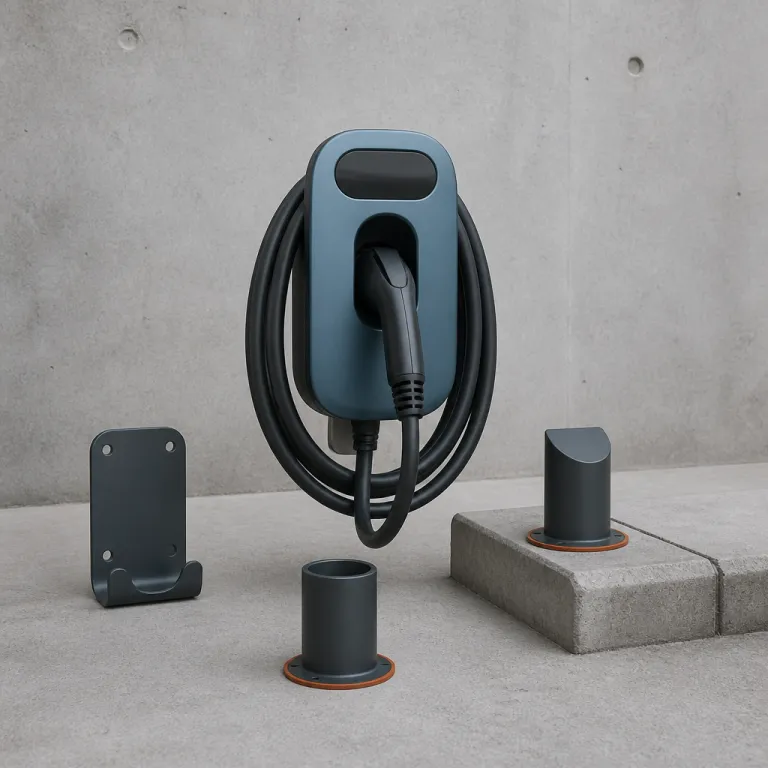
City hotel EV charging in urban parking: how the game really works
Urban luxury travel with an electric vehicle feels effortless only when the hotel has thought as carefully about charging as it has about the lobby scent. In dense downtown areas, where every parking space is contested, the way a property handles vehicle charging quietly separates truly EV-ready hotels from those that simply list “EV friendly” on a booking page. For EV drivers, understanding the real charging setup in city hotels and surrounding urban parking is now as essential as checking the room category.
Across major cities, only a minority of hotels offer meaningful charging infrastructure, and the average property still runs with just two chargers hidden somewhere in the parking garages. That scarcity means demand pressure is high during peak arrival hours, especially when several electric vehicles roll in from the airport at the same time. You need to know not only whether a charging station exists, but exactly where it is located, what level of charger is installed, and how long you can park there without penalties.
Industry commentary often suggests that roughly 15 percent of U.S. hotels now provide some form of electric vehicle charging, with most relying on Level 2 chargers rather than full fast charging units. This ballpark figure is based on a 2023 American Hotel & Lodging Association (AHLA) member survey on sustainability and technology adoption, which also notes that installations are concentrated in upper-upscale and luxury segments. These installations are usually the result of partnerships between city hotels and EV charging networks such as EVgo, ChargePoint, or Tesla, which integrate new charging stations into existing infrastructure. The deployment is ongoing, with infrastructure development focused first on densely populated downtown districts where electric vehicles and premium room rates already cluster.
The three urban models: garage, valet rotation, and curbside partnerships
In city hotel EV charging and urban parking, three models dominate, and each one changes how you plan your arrival. The first is the in-building garage, where charging stations sit on a dedicated level close to the elevators, often in prime parking space that doubles as a subtle status signal. The second is valet-managed vehicle charging, where you hand over the keys and the équipe quietly rotates electric vehicles through a limited number of chargers during the night.
The third model relies on partnerships with nearby public charging infrastructure, usually in municipal parking garages or private lots within a few hundred metres of the lobby. Here, the hotel may not own the charging station, but it will help you find charging locations, reserve a space, or add the cost to your room folio. This curbside or off-site approach is increasingly common in densely populated downtown cores where on-site parking free of congestion is impossible and curbside space is tightly regulated.
For planning, treat the in-garage model as the most convenient, valet rotation as the most flexible for late arrivals, and curbside partnerships as the option that demands more attention to hours and tariffs. When a property uses public fast charging nearby, you may gain access to DC fast chargers that top up your electric vehicle in under an hour, but you will usually pay a premium compared with slower hotel chargers. Before you book, read our guide on how to use specialist tools to find charging friendly hotels efficiently, then call the front desk to confirm how they actually manage electric vehicles on a busy weeknight.
Pricing, free parking myths, and what luxury EV drivers really pay
Room rate sorted, the next question in any city hotel EV charging and urban parking search is what you will pay to park and charge. In many global capitals, the base parking fee for hotel guests already sits between 20 and 60 dollars per day, and the electric vehicle charge is layered on top. Some charging hotels bundle everything into a single nightly fee, while others separate the parking and charging line items to reflect local regulations and energy costs.
Urban properties rarely offer genuinely free parking for electric vehicles, although you may see marketing language that hints at parking free of extra EV surcharges. Look closely at the conditions, because “free” often applies only to the charging session itself, not to the underlying parking space in the garage. In high-demand downtown areas, especially in cities such as San Francisco or New York, the combination of parking garages and EV charging infrastructure can easily add a three-figure sum to a two-night stay.
Expect Level 2 hotel chargers to be priced either per kilowatt hour, often in the 0.40 to 0.70 dollar range, or per session with a cap on hours to keep vehicles moving. When a property partners with a public fast charging network, you will usually pay the network’s own tariff, which can be higher during peak hours or in stations densely used by commuters. Charging equipment providers that track pricing across U.S. metro areas, such as Zencar in a 2022 analysis, report similar ranges for hotel charging costs. For a deeper look at how ultra-premium resorts handle these economics, compare your urban stay with the patterns described in our feature on EV charging at luxury resorts worldwide, then decide whether you prefer slow overnight charging or a quick fast-charge top up during a midday break.
New York, London, Tokyo, Paris: four cities, four different charging geographies
Every major city writes its own rules for city hotel EV charging in urban environments, and the differences matter when you are arriving with 10 percent battery. In New York, many luxury hotels rely on off-site parking garages, so the charging stations may sit a block or two away, managed by a third party that controls access hours and pricing. You might park at the hotel entrance, hand the keys to a valet, and have your electric vehicle quietly moved between several locations before morning.
London’s West End and City districts present a different pattern, where heritage buildings limit in-house infrastructure development and curbside charging stations fill the gaps. Here, you will often find charging locations on adjacent streets, with the hotel concierge guiding you to a specific charger and advising on local rules for how long you can park. Because these are densely populated neighbourhoods, the same charging station may serve residents, ride-hail vehicles, and hotel guests, so planning your charge around off-peak hours becomes essential.
Tokyo’s premium hotels tend to integrate a small number of Level 2 chargers into underground parking, reflecting both space constraints and a culture of meticulous infrastructure planning. Paris, by contrast, leans heavily on public charging infrastructure in municipal parking garages beneath major squares and boulevards, where electric vehicles from many arrondissements converge. In all four cities, the pattern is the same: the more populated areas become, the more you must think of vehicle charging as part of the overall urban mobility system rather than a private hotel amenity.
To make these differences easier to compare at a glance, consider the following simplified snapshot of typical urban patterns:
- New York: Mostly off-site garages; a mix of Level 2 chargers and occasional DC fast units; parking often 40–60 dollars per day plus energy fees; many hotels have only a handful of connectors.
- London: Heavy reliance on curbside and public chargers; primarily Level 2 or equivalent; pricing shaped by local borough tariffs; hotel-controlled spaces are limited in number.
- Tokyo: Small clusters of in-garage Level 2 chargers; parking charges vary by district but are typically bundled with room packages at upscale properties; charger counts are modest but well managed.
- Paris: Extensive municipal garages with public chargers; mix of Level 2 and some faster options; hourly or session-based pricing; hotels often direct guests to larger facilities with more bays.
How to read between the lines of hotel listings and EV maps
Most booking engines still treat city hotel EV charging as a simple yes or no filter, which is not nearly enough for a serious EV driver. A listing that says “EV charger available” could mean a single wall-mounted unit in a corner space, shared between dozens of electric vehicles on a busy conference night. It could also mean a bank of modern charging stations on the first level of the garage, reserved for guests and managed by a valet team that understands kilowatts as well as luggage tags.
To decode this, combine hotel websites with specialist EV mapping tools, then call the property directly to confirm the details that matter. Ask how many chargers they have, what level of charger each unit provides, whether the charging station is in the main parking garages or an off-site lot, and how they handle vehicles that stay plugged in beyond the stated hours. Clarify whether there is any form of free parking or parking free of idle fees for electric vehicles that finish charging overnight, because these policies vary widely between locations.
When you speak to reservations, listen for whether the staff can explain the charging infrastructure clearly or whether they subtly change the topic back to room categories. A confident team will tell you which populated areas around the hotel have public fast charging, how to find charging locations on arrival, and whether stations densely clustered near the property are usually full. For a concrete example of how this looks when done well, study our review of a San Francisco property that integrates EV amenities seamlessly into its downtown operations at this detailed urban EV hotel case study.
When to rely on the hotel charger and when to go public
Even in the best city hotel EV charging setups, the on-site charger is not always the smartest choice. If you arrive mid-afternoon with a nearly full battery, it may be better to park in a regular space and leave the limited charging stations free for guests who roll in later with single-digit range. In densely populated business districts, this etiquette keeps the small pool of chargers circulating and reduces the risk of demand surges that trigger higher tariffs.
On the other hand, if your electric vehicle is almost empty and you have an early morning meeting, the hotel charger becomes your overnight lifeline. In that case, prioritise a property with in-garage Level 2 chargers rather than relying on a curbside fast charging station that might be blocked or out of service. Use public fast charging only when you need a quick high-power top up between meetings, or when the hotel’s own charging infrastructure is limited to a single unit that cannot realistically serve multiple vehicles in peak hours.
Remember that public charging locations often sit in multi-use parking garages where tariffs change by the hour and stations densely packed with commuters can be hard to access. Hotel chargers, by contrast, are usually reserved for guests and may offer more predictable pricing, even if they are slower. The smartest strategy is flexible: rely on the hotel for predictable overnight vehicle charging, and treat public fast charging as a tactical tool for days when your schedule or route demands extra range.
What luxury EV travelers should ask before they book
For high-expectation travelers, the real luxury in city hotel EV charging and parking is not the sustainability badge, but the feeling that everything just works. Before you commit to a non-refundable rate, call or email the property with a short, precise list of questions about their charging infrastructure. Ask how many electric vehicles they can charge at once, whether the chargers are in the main parking garages or off site, and how they prioritise guests when all stations are occupied.
Clarify whether there is any form of free charging for elite status guests, or whether every kilowatt hour is billed separately from the parking fee. Inquire about the maximum number of hours you can leave your electric vehicle in a charging space before idle fees apply, and whether the valet team will move your car once the charge is complete. If the hotel relies on public charging stations in nearby populated areas, ask which charging locations they recommend and whether those stations densely used by locals tend to be full in the early evening.
Industry guidance for travelers is consistent: “Confirm charger availability before booking. Inquire about potential fees. Bring necessary charging adapters.” City hotels and EV charging networks are still in the early stages of infrastructure development, but the direction of travel is clear as more guests arrive in electric vehicles each month. The properties that will win this audience are the ones that treat vehicle charging as a core part of the guest journey, from the first search result to the moment you park, plug in, and head upstairs.
Key figures on urban hotel EV charging
- Approximately 15 percent of U.S. hotels currently offer some form of electric vehicle charging, according to a 2023 American Hotel & Lodging Association report on sustainability and technology adoption, which means EV drivers still need to carefully find charging friendly properties in most cities.
- The average hotel that does provide EV amenities has around two chargers installed, based on AHLA member survey responses and corroborating deployment summaries from several major charging networks in 2022–2023, so a single full parking night by a few vehicles can saturate the available charging infrastructure quickly.
- Urban hotels in major U.S. cities often charge between 20 and 60 dollars per day for parking, and many then add a separate EV charging fee that can range from 0.40 to 0.70 dollars per kilowatt hour, based on data from charging equipment providers such as Zencar and network pricing published in 2022.
- Only a small share of public charge points in markets like the United Kingdom are located at hotels, according to the UK Department for Transport’s 2023 public charging statistics, which pushes many city properties to rely on nearby public charging stations rather than building their own in-house infrastructure.
- Infrastructure deployment at city hotels typically uses Level 2 chargers for overnight stays, with DC fast charging reserved for select locations where space, grid capacity, and guest demand justify the higher installation cost. For example, the InterContinental San Francisco operates a mix of Level 2 and DC fast chargers in its garage; as one front office manager noted in a 2023 local press interview, “We sized our fast chargers for quick turnarounds, but most guests still prefer to plug in overnight on Level 2.”
FAQ about city hotel EV charging in urban environments
Do all city hotels offer EV charging for guests ?
No, not all city hotels provide EV charging, and availability still varies widely between brands and locations. Current industry data suggests that only a minority of properties have installed any form of charging infrastructure, especially in older downtown buildings. Always check the hotel’s website and then confirm by phone before assuming that a charger will be available for your stay.
Is there usually an extra fee for using a hotel EV charger ?
Many urban hotels do charge an additional fee for using their EV chargers, either per kilowatt hour, per session, or as a flat nightly supplement on top of standard parking. Some luxury properties occasionally offer free charging as part of a package or loyalty benefit, but this is not yet the norm. To avoid surprises, ask the front desk to explain both the parking and charging station tariffs, including any idle fees for staying plugged in beyond the allowed hours.
Can non guests use EV chargers located at city hotels ?
Policies differ by property and by partnership agreements with EV charging networks. Some hotels keep their charging stations strictly for in-house guests, especially when they only have one or two units in limited parking space. Others allow public access through network apps, treating the chargers as part of the wider urban charging infrastructure during off-peak hours.
How can I be sure a charger will be available when I arrive ?
There is no absolute guarantee, but you can significantly improve your chances by calling the hotel on the day of arrival and asking about current occupancy of the charging stations. In valet-managed garages, staff can often reserve a slot or plan a rotation so your electric vehicle charges overnight. In properties that rely on public charging locations, the concierge may guide you to nearby stations densely equipped with chargers that typically have better availability.
Should I rely on hotel chargers or use nearby public fast chargers instead ?
Use hotel chargers when you have several hours or an overnight stay, because Level 2 units are designed for slower, steady charging while you sleep or work. Choose nearby public fast charging when you need a rapid high-power top up during a short stop, or when the hotel’s own charging infrastructure is limited and fully occupied. The most efficient strategy in dense urban areas is to combine both options, using the hotel for predictable overnight charging and public networks for tactical daytime boosts.