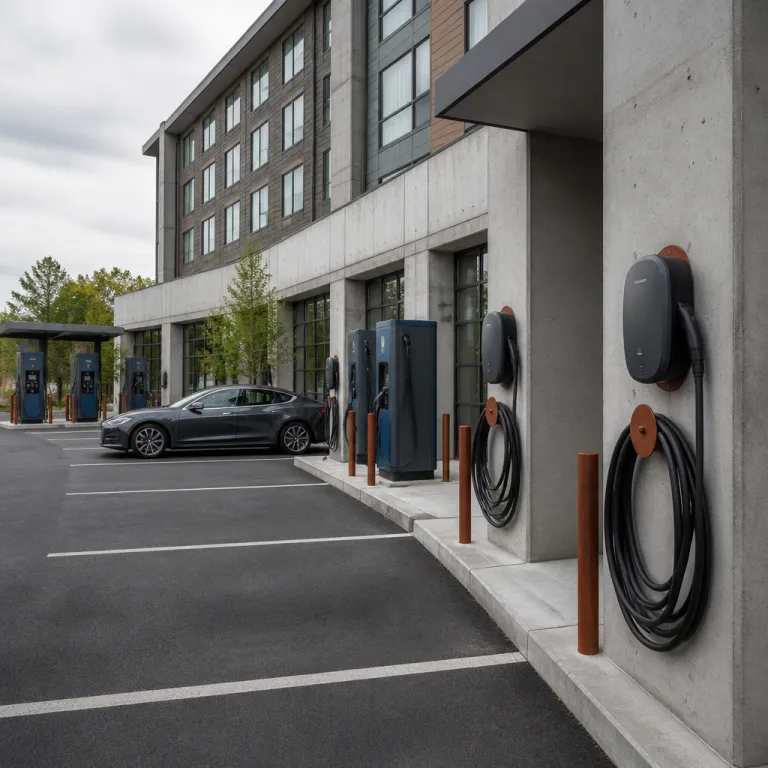
The spectrum of hotel EV charger equipment selection
Hotel EV charger equipment selection starts with one deceptively simple question. Will the property treat electric vehicle charging as a core hospitality service or as a token amenity in a distant corner of the parking area? That single decision shapes everything from the type of chargers installed to the guest experience you feel when you plug in.
Behind the scenes, hotel management, facility managers and electrical contractors move through a clear timeline that runs from planning to installation and then to daily operation. They assess how many electric vehicles already appear in the car park, evaluate electrical capacity for different level chargers and run cost benefit analyses that compare commercial charging hardware with lighter residential style units. Their choices define whether guests enjoy seamless hotel charging at well lit stations near reception or hunt for a lone charging station beside the dumpsters.
At the most basic end of hotel EV charging infrastructure sits the simple outlet, technically a very low level charger that may add only a few kilowatt hours overnight. Step up and you reach standalone Level 2 chargers, which for hotels charging guests’ vehicles are the current workhorse of the industry and typically deliver between about 3 and 19 kilowatts depending on the model and local standards, as outlined in guidance from the U.S. Department of Energy’s Alternative Fuels Data Center. At the top of the spectrum are networked commercial charging stations and occasional DC fast chargers, which transform a hotel parking area into a genuine vehicle charging hub for both staying guests and limited public charging access.
Connector standards, power levels and heritage constraints
Once a hotel commits to real charging infrastructure, the next layer of hotel EV charger equipment selection is technical but crucial. Connector standards, power levels and the character of the property itself all influence whether your electric vehicle charges smoothly or sits tethered to an incompatible station. For a luxury stay, the most elegant lobby means little if the charger cannot talk to your car.
In the United States, NACS and CCS dominate electric vehicle connectors, while Type 2 remains central in much of Europe and other regions, as defined in SAE J3400 and SAE J1772 for North American interfaces and IEC 62196 for Type 2 and related plugs. Thoughtful hotels choose level chargers that match their primary guest mix, often installing multiple connector types on the same charging stations to support both local vehicles and international guests on long term road trips. The best hotel EV charging strategies also consider future proofing, adding conduit and spare capacity during installation so that extra chargers can be added without tearing up the parking area again.
Heritage properties face a different puzzle, because thick stone walls and protected façades complicate any new charging station installation on site. Smart owners work with electrical contractors and local authorities to route cabling discreetly, sometimes placing a level charger in a stable block or courtyard where vehicle access is easy but visual impact is minimal. For a deeper look at how historic properties balance character with modern charging infrastructure, see this guide to heritage hotels adding EV capability: heritage hotels with EV charging.
Networked versus standalone: how connectivity shapes your stay
Two hotels can list “EV charging available” and yet deliver radically different realities in the parking lot. The quiet difference is whether the property chose networked commercial charging stations or simple standalone chargers with no software layer. For guests, that choice determines everything from payment to support when a charger misbehaves.
Standalone Level 2 chargers are cheaper to buy and easier to install, which tempts smaller hotels that want basic vehicle charging without complexity. A typical wall mounted unit from brands such as ChargePoint Home Flex or Wallbox Pulsar Plus might cost a few hundred to around a thousand dollars before installation, and they usually provide a fixed level of power, rely on simple RFID cards or free access and offer no live data on charger status, so a guest may arrive to find the only charging station already occupied. Networked commercial charging systems cost more but allow hotel management and facility teams to monitor every charger, set tariffs, push firmware updates and integrate usage data into hotel management systems.
For you as a guest, networked hotel charging often means app based access, clear pricing and the ability to start or stop a charge from your room. These platforms can also prioritise guest satisfaction by limiting public charging access during peak occupancy, reserving stations hotels actually need for overnight stays rather than day visitors. To understand why charger placement matters as much as the number of units, this analysis of charger location strategy is essential reading: why charger location matters more than count.
Speed, pricing models and the rise of charging as a service
Power level is where hotel EV charger equipment selection becomes very tangible for the driver. A basic low level charger might add only a modest amount of energy overnight, while a high end commercial Level 2 unit can comfortably refill most electric vehicles between check in and breakfast. DC fast chargers go further, but they introduce new trade offs that not every property can justify.
Level 2 chargers span a wide range, from roughly 3 kilowatts for a simple outlet style solution up to around 19 kilowatts for a fully fledged commercial charging unit, in line with typical values reported by the U.S. Department of Energy and major charging networks. As a rough benchmark, hotels might pay from a few thousand dollars for a basic dual port Level 2 installation to tens of thousands for a DC fast charger once trenching, switchgear and permitting are included, though exact figures vary by region and grid capacity. For most hotels charging guests’ vehicles, the sweet spot is a mid to high level charger that balances installation cost, available grid capacity and the typical duration of a guest stay. DC fast charging and ultra fast chargers make sense at highway locations or urban hubs with significant public charging demand, but they require heavier infrastructure, higher energy contracts and more complex support arrangements.
To manage these costs, many independent hotels now turn to charging as a service models that bundle hardware, software and maintenance into a monthly fee. This approach lets smaller properties compete with chains on hotel charging quality without heavy upfront capital expenditure, while still delivering strong guest experience and long term guest satisfaction. For drivers planning multi stop itineraries that weave together different stations hotel by hotel, this route planning guide is a useful companion: planning an EV road trip with hotel charging.
How to read charger specs before you book a room
For EV drivers, the most powerful tool is not a new charger but better information. Hotel EV charger equipment selection only helps you if you can decode the listing and match it to your electric vehicle and your itinerary. A few minutes of research before booking can turn a stressful arrival into a relaxed check in with a guaranteed charge.
Start by confirming whether the hotel offers dedicated charging stations or simply access to a general outlet in the parking area. Look for clear details on the number of chargers, the power level of each charging station and the connector types supported, then compare those with your vehicle charging port and your expected arrival state of charge. When in doubt, contact the property directly and ask hotel management or facility staff whether the chargers are reserved for guests, whether public charging is allowed and whether any usage fees apply.
Remember the basics that experienced EV travellers quietly follow on every trip. “Confirm charger availability before booking.”, “Bring your own charging cable.”, and “Check for any usage fees.” are simple rules that still protect your guest experience when information is incomplete. As EV adoption grows and more hotels charging infrastructure comes online, the properties that communicate clearly and invest in robust commercial charging solutions will win the loyalty of drivers who now choose their hotel as much for the charger as for the room.
FAQ
Do all hotels offer EV charging for guests ?
Not all hotels provide electric vehicle charging, and availability varies widely by location and brand. Many luxury and premium hotels now install dedicated charging stations, but some properties still rely on a single outlet or have no chargers at all. Always check the hotel website or contact the property directly to confirm the type and number of chargers before you book.
What types of chargers do hotels usually install ?
Most hotels install Level 2 chargers, because they balance reasonable installation costs with overnight charging speeds that suit typical guest stays. Some highway or airport properties add DC fast chargers to serve drivers who need a rapid top up during the day. When you review a listing, look for the stated power level in kilowatts and the connector type to ensure compatibility with your vehicle.
Is hotel EV charging typically free or paid ?
Pricing for hotel charging varies, with some properties offering complimentary use for guests and others charging per kilowatt hour, per session or per hour parked. Luxury hotels sometimes bundle charging into premium room categories or loyalty tiers, while commercial charging networks usually apply standard tariffs through their apps. Always ask about fees in advance, because a free charger can be a meaningful added value on a longer stay.
How many chargers does a hotel need for good guest experience ?
The ideal number of chargers depends on the size of the hotel, the share of guests driving electric vehicles and whether public charging is allowed for non guests. As a rule of thumb, properties that aim to be EV friendly should plan for several Level 2 chargers per hundred rooms and reserve at least some spaces exclusively for staying guests. More important than raw numbers is smart placement, clear signage and reliable support when a charger is offline.
What should I ask a hotel about EV charging before I reserve ?
Before you commit, ask the hotel about the number of charging stations, the power level of each charger, the connector standards supported and whether spaces can be reserved. Clarify whether charging is free or paid, whether public charging users share the same stations and whether staff can provide support if a charger fails. These questions help you judge whether the charging infrastructure will genuinely support your trip or merely exist as a marketing line.