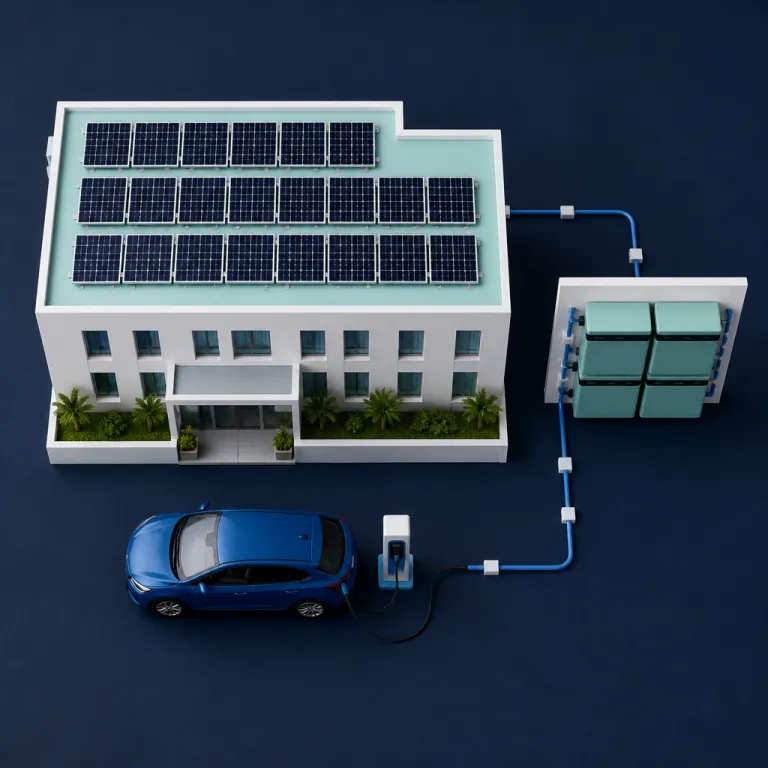
From rooftop solar panels to your EV: how the hotel energy loop really works
Picture arriving at a coastal resort where the solar powered EV hotel charging set up is as considered as the wine list. On the roof, solar panels quietly convert sunlight into solar energy, feeding a hotel wide system that also supports guest rooms, kitchens, and the spa. By the time you roll into the porte cochère, your electric vehicle is already part of that closed loop of renewable energy and refined hospitality.
Here is the basic choreography of this energy loop when it actually works. During the day, the solar system generates power while demand is moderate, and surplus electricity flows into on site battery storage rather than straight back to the grid power at low tariffs. As evening falls, that stored solar power is released to the EV charging stations, so your vehicle charging session draws mostly from clean solar charging instead of fossil heavy grid electricity.
Hotel management usually partners with a specialist solar energy provider, a battery manufacturer, and an EV charging company to integrate every charger into one coherent solution. The energy system integration is deliberate; methods typically include rooftop solar panels, wall mounted storage units, and a mix of Level 2 smart chargers positioned near reception or valet. In many real projects, that might look like a 150 kW rooftop array paired with 300 kWh of lithium iron phosphate batteries and eight 11 kW AC chargers, all coordinated by a single energy management platform.
When this installation is done well, you plug in at check in, the charger authenticates your electric vehicle, and the system decides whether to charge from storage, live solar power, or the grid. Behind the scenes, inverters convert DC from the panels and batteries into AC for the hotel load, while software caps total charging power so the main service connection is never overloaded.
For you as a guest, the experience should feel almost invisible. You park, connect the cable to your car and the charging station, confirm the charge in your app, then head to dinner while the system optimizes flows between panels, batteries, and grid power. By morning, your electric vehicle is ready with a full charge, and the hotel has quietly reduced its energy costs and carbon footprint without compromising comfort.
Luxury stays that close the loop: where solar powered EV hotel charging feels effortless
Among luxury properties, the most convincing sustainability stories now start on the roof and end at the EV bay. You see it in resorts where solar carports shade the parking area, solar panels line the main building, and a neat row of chargers sits just steps from the lobby. These hotels treat solar powered EV hotel charging as a core amenity, not an afterthought hidden behind the dumpsters.
Look for properties that make the energy system part of the guest narrative rather than a vague green badge. Some coastal retreats offer guided walks that explain how their solar system, battery storage, and EV charging stations interact, while urban hotels highlight live dashboards showing real time solar power generation and vehicle charging loads. When staff can clearly explain how the charger draws from storage first, then from solar charging, and only finally from grid power, you know the installation is more than marketing.
At refined roadside inns and premium motels, the difference often lies in charger placement and clarity. A property like the one profiled in this EV ready inn review shows how a small hotel can pair a compact solar powered system with a handful of smart chargers and still deliver a seamless overnight charge. You arrive late, plug into a clearly signed charging station, and the system automatically balances power between guest rooms and electric vehicles without tripping breakers.
Dataset insights underline why these hotels invest so heavily in renewable energy. A 2023 analysis by the U.S. National Renewable Energy Laboratory (NREL) on commercial buildings with on site solar and storage—see, for example, its report on co-optimizing building and EV charging loads—found that combining photovoltaic arrays with batteries and managed EV charging can cut grid energy use for charging by roughly 40 to 60 % and reduce overall electricity costs by around 30 to 50 % in favorable markets. Case studies from hotel portfolios in sun rich regions, such as a Southern California coastal resort cluster cited in that work, report annual CO2 reductions on the order of several hundred tons when a mid sized rooftop system and battery bank are dedicated partly to EV charging. For you, that translates into a quieter, cleaner stay where the only thing you notice is that your car is fully charged and the breakfast buffet is ready when the battery is.
The economics behind solar powered EV hotel charging: what it means for your stay
Behind every elegant row of chargers there is a spreadsheet balancing installation costs, energy incentives, and long term savings. Hotels typically face three main cost buckets for solar powered EV hotel charging: the solar panels and mounting, the battery storage system, and the EV charging stations themselves. Add trenching, wiring, and software, and the initial outlay can look steep even for a premium property.
Yet the financial story shifts once you read how renewable energy incentives and tax credit structures apply to hospitality projects. In many markets, hotels can claim a federal tax credit on a portion of the solar energy installation, sometimes paired with state level incentives for EV chargers and battery storage. In the United States, for example, the Investment Tax Credit (ITC) has recently covered up to 30 % of eligible solar and storage costs for qualifying projects under current IRS guidance, while separate programs support Level 2 charging hardware. Spread over a long term horizon, these benefits reduce the effective costs of the solar system and make every kilowatt hour of charging solar electricity more competitive with standard grid power.
Operationally, the numbers are compelling when the system is sized correctly. Level 2 chargers typically draw between 7 and 19 kilowatts, which sits comfortably within the output of a medium commercial solar power installation backed by storage, especially when charging is concentrated overnight. A typical 200 kW rooftop array in a sunny climate with average annual insolation of about 1,700 to 1,900 kWh per kW (roughly a 16 to 18 % capacity factor) can generate around 280,000 to 320,000 kWh per year, enough to cover a significant share of both hotel loads and EV charging when paired with 400 to 600 kWh of batteries.
Hotels that pair solar panels with batteries can cut their reliance on grid electricity for vehicle charging by an estimated 40 to 60 %, which stabilizes energy costs and shields them from volatile tariffs. Consider a simplified example: a 120 room property installs a 180 kW solar array, 400 kWh of storage, and ten 11 kW chargers at a combined net cost of $650,000 after incentives. If the system offsets about 260,000 kWh of grid electricity per year at an average blended rate of $0.25 per kWh—assuming a similar capacity factor and moderate charger utilization that keeps most sessions within the hotel’s own solar and storage envelope—the annual savings approach $65,000, implying a simple payback of roughly 10 years before factoring in rising tariffs or potential charging revenue.
For guests, this financial architecture has practical consequences. Properties that recover their investment through energy savings rather than punitive charging fees are more likely to offer fair pricing per charge, or even complimentary charging for direct bookings. When you compare options on a booking platform, look for hotels that mention solar powered infrastructure, transparent charging costs, and integrated energy management, much like the forward thinking city properties highlighted in this guide to elegant urban stays with considered amenities.
How to tell real solar powered EV hotel charging from greenwashed claims
Not every hotel that mentions solar power and EV chargers is running a genuine closed loop energy system. Some properties install a token solar charger or a single charging station while still drawing almost all electricity from conventional grid power. Others highlight electric vehicles in their marketing but offer only one slow charger for the entire car park.
Start by checking the hotel’s website or booking listing for specific language about solar panels, battery storage, and the number and type of chargers. Phrases like “Level 2 smart chargers powered by on site solar energy and storage” are more credible than generic references to “eco friendly charging”. If you can, read the property map or photos to see whether solar carports or rooftop panels are visible near the EV bays, which suggests a more integrated solar powered solution.
Once you have narrowed your options, send a concise email with three questions. Ask whether the EV chargers are connected to a solar system with battery storage, whether the charging stations are available to guests overnight, and whether the hotel can estimate what share of vehicle charging comes from renewable energy versus the grid. You can also ask if they benefit from any tax credit or federal tax incentive for their installation, which often indicates a more serious investment in charging solar infrastructure.
During your stay, small details confirm the story. Clear signage at each charging station, visible cabling from solar panels to inverters, and staff who can explain how to start a charge all point to a well managed system. As one reference explains succinctly, “How do hotels integrate solar energy? By installing solar panels and battery storage systems.” When you see that combination feeding multiple chargers rather than a single token plug, you are likely looking at the real thing.
Planning your EV trip around the hotel energy loop of tomorrow
For the solo explorer planning a cross country drive, the smartest route now follows not just fast chargers on highways but hotels with serious solar powered EV hotel charging. These are the places where the energy loop is tight: solar panels on the roof, battery walls in the back of house, and a neat line of chargers where you actually want to park. Booking them turns an overnight stop into a quiet refuelling ritual powered by sunlight captured hours earlier.
When you plan, filter for properties that mention renewable energy, EV charging stations, and on site storage, then read guest reviews for comments about reliability and speed. Look for mentions of smart chargers that schedule charging solar sessions for off peak hours, or systems that prioritize vehicle charging from stored solar power before drawing from the grid. A deeper dive into resources like this guide to smart charging after dark helps you understand how invisible software decisions shape your experience at the plug.
Future facing hotels are already experimenting with more advanced energy system designs. Some are exploring vehicle to grid concepts, where electric vehicles could one day feed power back into the hotel during peaks, while others refine solar carports that expand both shade and generation capacity. For now, your best move is simple: choose properties where the solar system, storage, and chargers are clearly described, where staff are ready to answer questions, and where your EV charge feels as thoughtfully handled as your check in.
FAQ
How do hotels integrate solar energy into EV charging for guests ?
Hotels integrate solar energy into EV charging by installing solar panels on roofs or solar carports, connecting them to a battery storage system, and then feeding that stored power to on site charging stations. This configuration allows the chargers to draw primarily from solar power generated during the day, with grid power acting as a backup. The result is a cleaner energy mix for vehicle charging and more stable electricity costs for the property.
Are hotel EV chargers usually free for overnight guests ?
Policies vary widely between properties, even among luxury hotels with solar powered EV hotel charging. Some hotels treat the charge as a complimentary amenity for direct bookings or premium rooms, while others bill per kilowatt hour or per session to offset installation costs. Always check the charging fees in advance so you know whether the price reflects grid electricity rates, a solar powered discount, or a flat convenience charge.
Do all high end hotels now offer EV charging stations on site ?
Not all premium hotels have EV chargers yet, and even fewer have fully integrated solar charging systems with storage. Availability depends on the hotel’s location, parking layout, and willingness to invest in renewable energy infrastructure. When booking, confirm not only that chargers exist but also that they are compatible with your electric vehicle and accessible during the hours you plan to charge.
What should I check before relying on a hotel for my EV charge ?
Before you rely on a hotel for your EV charge, confirm three things directly with the property. First, check that the charging station type and connector match your electric vehicle, then ask how many chargers are available and whether reservations are needed. Finally, ask whether the system uses solar power with battery storage or only grid electricity, so you understand both reliability and sustainability.
Why does battery storage matter if a hotel already has solar panels ?
Battery storage matters because most guests charge overnight, long after the sun has set on the solar panels. Without storage, a hotel’s EV chargers must rely almost entirely on grid power during those hours, which undermines the benefits of solar powered EV hotel charging. With a well sized storage system, the hotel can bank daytime solar energy and release it slowly into chargers through the night, closing the energy loop between roof, battery wall, and your EV plug.