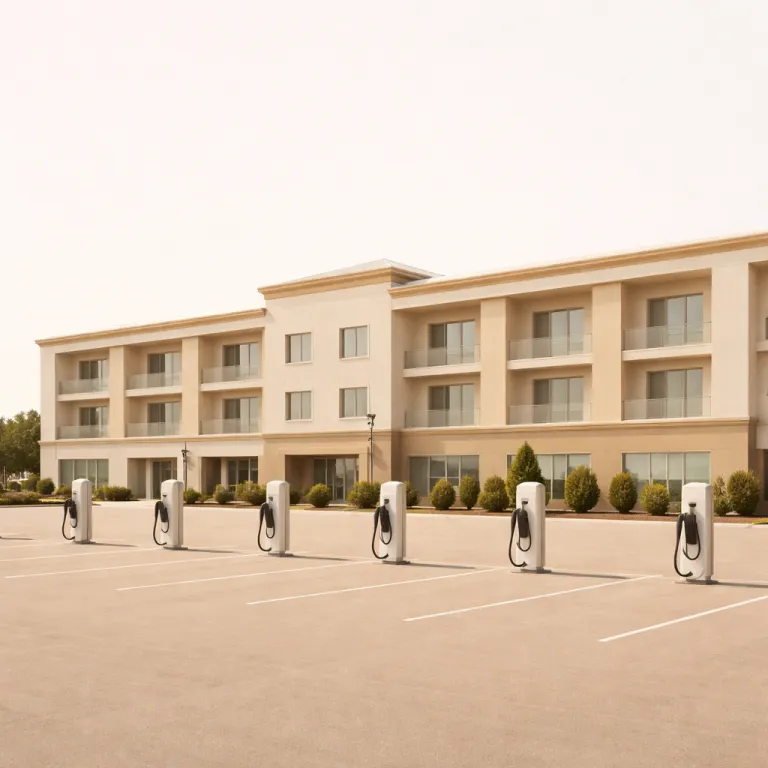
Trimark EV charging hotels and the zero cost to property shift
Trimark EV charging hotels sit at the intersection of hospitality, energy and commercial real estate. For EV driving guests, the promise is simple yet powerful: plug in at check in, wake up to a full battery and a clear route. Behind that simplicity lies a structured infrastructure program that changes how hotels think about vehicle charging, long term asset value and guest loyalty.
Trimark Hospitality Group’s partnership with EV+ brings fully managed charging to a seven state hotel portfolio across the western and southern United States, including California, Arizona, New Mexico, Colorado, Texas, Oklahoma and Washington. EV+ is one of the largest owner operators of EV charging in hospitality, assuming design, engineering, permitting, installation and 24/7 driver support for every electric vehicle charger on site. Typical deployments combine Level 2 chargers for overnight stays with a smaller number of DC fast chargers for en route guests. Property teams have zero operational responsibility, which means front office staff can focus on guest experience rather than troubleshooting managed charging hardware in the parking lot.
The model matters for both the hotel and the guest. A zero capex, fully managed structure removes the financial and operational barrier that kept many mid scale hotels from installing vehicle charging as a core amenity. As Hafiz Jiwani of Trimark Hospitality Group notes in coverage of the partnership on EIN Presswire in 2024, EV+ stood head and shoulders above other providers because they understand the hotel business and structure projects around metrics that matter: occupancy, RevPAR, guest scores and NOI. Under long term agreements, often running ten years or more, EV+ funds, owns and operates the chargers while sharing revenue with the property, aligning incentives around utilization and guest satisfaction.
What EV+ and Trimark hospitality mean for guest experiences in exclusive resorts
For EV drivers choosing between Trimark EV charging hotels and a conventional property, the difference is felt from arrival. At an exclusive resort in Arizona or a coastal retreat in California, the presence of clearly signed, operational chargers near the entrance signals that vehicle charging is treated as a first class amenity for guests. J.D. Power’s Electric Vehicle Experience (EVX) Public Charging Study, most recently published in 2023, reports that EV drivers are significantly more satisfied when charging is convenient, reliable and easy to access, and that charging availability increasingly influences hotel selection and perceived value.
Because EV+ acts as owner operator of the charging infrastructure, resort management can integrate the service into broader hospitality offerings without adding technical complexity. That means reception can handle charging access alongside spa bookings and late check out, while property management teams track usage data as part of their real estate and energy strategy. In practice, hotels can monitor dwell times, peak charging windows and repeat visit patterns, then tailor packages that bundle parking, charging and premium room categories for high value guests.
Trimark EV charging hotels also reshape how exclusive resorts in the United States think about tenant experience in mixed use developments. When a hospitality group operates within a larger commercial real estate complex, EV+ managed charging can serve both overnight guests and long term office tenants during the day. This dual use approach turns a single project into a revenue generating amenity that supports both guest experiences and tenant experience, strengthening the overall value of the estate and helping owners future proof assets as EV adoption accelerates.
From Los Angeles to Texas: how zero capex charging changes booking decisions
On the ground, Trimark EV charging hotels in markets such as Los Angeles, Texas and Washington translate strategy into very real booking choices. A business leisure traveler landing in Los Angeles for meetings, then driving to an exclusive resort in New Mexico, now filters for hotels where vehicle charging is guaranteed and professionally supported. When EV+ handles maintenance, software monitoring and driver support, the risk of arriving to an offline charger drops, which directly improves guest scores, repeat bookings and positive reviews on travel platforms.
For hotel owners across the United States, the zero cost to property model reframes EV charging from a capital expense into a managed service. Instead of tying up funds in hardware, an owner operator can rely on EV+ to deploy and maintain chargers across the hotel portfolio under multi year contracts, while Trimark Hospitality focuses on core hospitality services and revenue management. This alignment between operational simplicity and guest centric amenities is exactly what industry analysts at National Law Review and EIN Presswire highlight in their 2024 coverage of the partnership, noting that risk transfer to a specialist operator can accelerate rollout timelines and standardize the guest experience.
The implications extend beyond individual hotels into broader real estate strategy. As more Trimark EV charging hotels come online, commercial real estate investors will start to view high quality charging as a standard amenity, much like Wi Fi or a fitness centre, embedded into property management plans from the outset. For EV travelers planning refined electric road trips through Europe or North America, curated guides increasingly treat reliable overnight charging as non negotiable, showing how quickly expectations are rising; the best stays are now defined by both the room and the charge.
Practical guidance for choosing Trimark EV charging hotels
For travelers evaluating Trimark EV charging hotels against other options, a few practical checks help secure a smooth stay. Always confirm charger availability before booking, either through the hotel directly or via EV focused apps, and ask whether the charging is managed by EV+ or another provider. Clarify any charging fees in advance, since some hotels offer complimentary sessions for amenity guests while others price vehicle charging per kilowatt hour, per session or as part of a bundled parking package.
Compatibility remains essential, especially for international guests bringing different connector standards into the United States. Verify that the property offers Level 2 chargers or fast chargers that match your electric vehicle, and ask whether charging is limited to overnight guests or also open to day visitors. In mixed use properties where hospitality shares space with offices or retail, understanding how tenant experience and guest experience are balanced around peak charging times can prevent unwelcome surprises and help you plan arrival and departure windows.
From an industry perspective, Trimark EV charging hotels illustrate how hospitality, energy and real estate management are converging. The partnership between Trimark Hospitality Group, EV+ and wider commercial real estate stakeholders shows that when charging is fully managed, hotels can elevate guest experiences without adding operational strain. For EV travelers, that means one less variable to worry about on the road and a stronger reason to choose properties where the charging strategy is as carefully designed as the lobby, the guest rooms and the wider amenity mix.
Key references
J.D. Power; Electric Vehicle Experience (EVX) Public Charging Study, 2023 edition.
EIN Presswire; Trimark Hospitality Group partners with EV+ to deploy fully managed EV charging across seven state hotel portfolio, 2024.
National Law Review; coverage of the Trimark Hospitality and EV+ managed charging partnership in the United States, 2024.