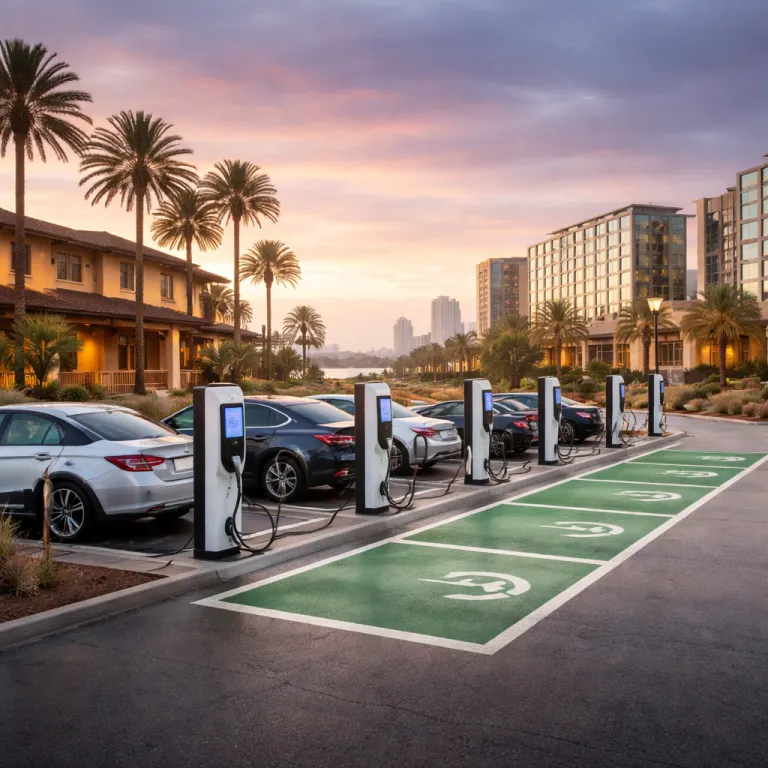
EV charging mandate hotels worldwide and what it means for luxury travelers
EV charging mandate hotels worldwide are no longer a niche curiosity for early adopters. Governments from the United States to the Gulf are quietly rewriting building codes, and the most ambitious hotel chains now treat electric vehicle charging as seriously as spa design. For you as a guest, that means the difference between a seamless overnight charge and a stressful hunt for public charging stations after a long flight.
Across leading destinations, regulators are moving from encouragement to obligation, pushing new properties to integrate charging infrastructure at the design stage. In several U.S. states, updated building codes now require a defined share of new parking spaces to be EV ready, which pushes hotels charging ahead of slower competitors that still treat chargers as optional décor. This new regulatory level of pressure is creating a two speed map of charging friendly hotels worldwide, where some cities feel effortless for electric vehicles and others still feel like a detour.
For premium travelers, the mandate era changes how you evaluate a charging hotel before you book. You now need to look beyond the green leaf icon and ask what type of charger is installed, how many charging stations are reserved for guests, and whether fast chargers or only slower level 2 options are available. Luxury properties that take this seriously are already reporting higher guest satisfaction scores, because the guest experience starts the moment you plug in, not when you reach the lobby.
How regional mandates differ from the United States to Europe and the Gulf
EV charging mandate hotels worldwide follow very different rulebooks depending on where you land. In the United States, federal incentives such as the Alternative Fuel Infrastructure Tax Credit have historically covered up to 30 percent of eligible commercial EV charging installation costs, and some hotel owners combine state and utility programs to offset a large share of their upfront investment, according to U.S. Department of Energy guidance. That financial architecture is one reason you increasingly see hotel charging infrastructure expanding fastest in states with aggressive climate policies and generous rebates.
On the ground, that translates into more hotels charging guests’ electric vehicles in coastal states than in the interior. California, New York, Massachusetts and Washington DC, for example, have adopted building code provisions that require a portion of new parking spaces in many commercial developments to be wired for chargers, based on state and city code updates. This nudges both independent properties and major hotel chains to integrate charging solutions into every new project. If you are planning a business trip with an extended leisure stay, this makes coastal corridors some of the most reliable regions for finding a charging hotel with multiple stations and clear energy management policies.
Europe is taking a slightly different path, with the United Kingdom simplifying planning permissions for commercial charger installations and allocating tens of millions of pounds to expand public charging infrastructure, according to recent government announcements. That combination of easier permits and public funding is already visible in London and regional hubs, where fast charging and even ultra fast chargers are appearing in mixed use developments that include hotels. For a deeper look at how to time your charge on both sides of the Atlantic, guides on planning the best time to charge an EV car at home can also sharpen your instincts for hotel charging strategy on the road.
New builds versus existing properties: why your EV stay feels different
EV charging mandate hotels worldwide are split into two camps, and you feel the difference the moment you drive into the car park. New build properties can design charging infrastructure from the ground up, routing power, planning battery storage and integrating smart energy management systems that balance guest demand with grid constraints. Existing hotels, by contrast, often retrofit a handful of chargers into awkward corners, which can leave guests queuing or blocked by combustion engine cars.
For new projects, building codes in several regions now require a minimum level of EV readiness, usually meaning pre wired spaces that can host future charging stations without major construction. Luxury hotel chains use this as an opportunity to install a mix of level 2 chargers for overnight charging and a few fast chargers for short stay guests, often paired with digital technology that lets you reserve a charger from your room. When you read that a property is offering charging as part of its core amenity set, you should expect this kind of integrated design rather than a single lonely charger near the loading bay.
Existing properties face more complex infrastructure and energy constraints, especially in dense city centers where grid capacity is tight. Many of the most forward looking charging hotels partner with specialists such as EnviroSpark or EV Connect to design tailored charging solutions that include smart load management and, in some cases, on site battery storage to smooth peaks. At the Four Seasons Hotel George V in Paris, for example, guests describe in reviews how a discreet Type 2 charger near the entrance is coordinated by valet staff so the car is topped up by breakfast, echoing the kind of refined electric road trip experience highlighted in curated Paris hotel guides on EV Stay.
From amenity to expectation: how mandates reshape guest experience and satisfaction
EV charging mandate hotels worldwide are changing what luxury means for the EV driving executive on a tight schedule. Where a charger once felt like a pleasant surprise, it now sits alongside high pressure showers and late checkout as a basic expectation, especially for frequent travelers in the United States and Western Europe. When a hotel fails to provide reliable hotel charging, the friction shows up instantly in guest satisfaction scores and repeat booking patterns.
For you as a guest, the most important shift is from symbolic sustainability gestures to operational excellence in charging. A property that installs several charging stations but offers no clear signage, no reservation system and no trained staff will still compromise the guest experience, even if the hardware looks impressive. The best charging hotels treat chargers as part of core hospitality, with front desk teams trained to manage charger allocation, explain charging levels and coordinate with valet staff so your electric vehicle is ready when your morning meeting ends.
Hotel chains that embrace this mindset are already using case studies to refine their playbooks across portfolios. IHG Hotels & Resorts, for example, has announced a partnership with EnviroSpark to roll out chargers across hundreds of hotels in the United States and Canada, turning hotels charging into a networked amenity rather than a one off feature, according to company statements. For a sense of where this is heading, look at analyses of how premium charging networks elevate luxury hotel stays for electric travelers, where fast charging, ultra fast options and seamless payment are woven into the overall property experience.
Mandate versus reality: why EV travelers still need to verify every charger
EV charging mandate hotels worldwide sound reassuring on paper, but mandates do not automatically translate into working chargers on site. Regulations can require conduit, capacity or a minimum number of EV ready spaces, yet some properties delay installing actual chargers until guest demand becomes impossible to ignore. That gap between legal compliance and real world charging infrastructure is where many electric vehicles owners still feel let down.
For now, the most reliable strategy is to treat every charging hotel as a hypothesis to be tested before you arrive. Always confirm charger availability before booking, check for any associated fees, and verify charger compatibility with your vehicle, because not every property offers the same connector types or charging levels. Even in regions with strong public charging networks, such as parts of the United States and the United Kingdom, relying on public charging alone can erode the calm, time efficient rhythm that defines a premium road trip.
Real world case studies show that even hotels charging guests nothing for electricity can create frustration if management fails to enforce parking rules or maintain the equipment. A single out of service charger can derail an evening if there are no nearby fast charging alternatives, especially in resort areas with limited public charging options. When you read reviews, pay attention to comments about charger uptime, queue management and how quickly staff respond to issues, because those details reveal more about hospitality culture than any sustainability statement.
How to choose the right EV friendly luxury hotel in the mandate era
EV charging mandate hotels worldwide give you more options than ever, but choice without criteria can still disappoint. Start by deciding what charging experience you actually need on this trip, whether slow overnight charging on level 2 chargers is enough or whether you require fast charging or even ultra fast options between meetings. Business leisure travelers often benefit from a mix, using hotel charging for long top ups and nearby public charging stations for quick daytime boosts.
When comparing properties, look beyond the simple statement that a hotel is offering charging to guests. Count how many chargers are available, whether they are reserved for overnight guests, and whether the hotel uses smart technology or apps to manage access and payments. A charging hotel that integrates chargers into valet operations, uses dynamic energy management and communicates clearly at check in will usually deliver a smoother guest experience than a property that simply lists chargers on a map.
Finally, consider how EV readiness fits into the broader hospitality philosophy of the property. Hotels that treat charging solutions as part of long term sustainability strategy tend to invest in resilient infrastructure, from upgraded electrical panels to future ready conduit for additional charging stations as electric vehicle adoption grows. Those are the hotels charging ahead of the curve, turning a once niche amenity into a quiet, reliable backbone of modern luxury travel where you plug in at arrival, sleep well and roll out with a full battery and a clear head.
Key figures shaping EV charging mandate hotels worldwide
- Industry surveys suggest that only a minority of hotels currently offer EV chargers, which means many properties still leave electric vehicles dependent on public charging or ad hoc solutions, according to recent hospitality research.
- Major global groups such as IHG Hotels & Resorts, Hilton and Marriott have each announced plans or partnerships to expand EV charging across hundreds of properties in North America and Europe, based on company disclosures and press releases.
- California, New York, Massachusetts and Washington DC have introduced building code requirements that designate a share of new parking spaces in many commercial developments as EV capable or EV ready, according to state and city code documentation.
- The United Kingdom government has committed tens of millions of pounds to expand EV charging infrastructure, including support for commercial charging stations that benefit hotels in both major cities and regional destinations, as outlined in official funding announcements.
- In the Gulf region, policy statements in markets such as the United Arab Emirates indicate that five star hotels are expected to be EV ready within upcoming regulatory cycles, pushing luxury properties to prioritise chargers, energy capacity and guest facing charging solutions.
FAQ about EV charging mandate hotels worldwide
Do all hotels offer EV charging for guests ?
Not all hotels offer EV charging, and availability still varies widely between regions and property types. Some luxury properties have multiple charging stations and fast chargers, while others have no chargers at all despite operating in markets with strong mandates. You should always confirm charger availability before booking, especially if your electric vehicle is your only transport option.
Are hotel EV chargers usually free to use ?
Some hotels provide chargers as a complimentary amenity, while others charge fees either per kilowatt hour or per charging session. Policies differ even within the same hotel chains, depending on local energy costs and management strategy. Always check whether hotel charging is free or paid, and whether public charging nearby might offer better fast charging or ultra fast rates.
How can I reliably find hotels with EV charging infrastructure ?
You can use booking platforms that include EV charger filters, as well as specialist guides focused on charging hotels and EV friendly properties. Many hotel websites now list charging solutions under sustainability or amenities sections, but third party maps and apps remain useful for verifying charger types and charging levels. Combining these tools with recent guest reviews gives the clearest picture of real world charger performance.
What should I check about a hotel charger before I arrive ?
Confirm the connector type, charging level and whether the charger is reserved for guests or shared with public charging users. Ask how many charging stations are available, whether you need to reserve a slot, and if there are time limits for hotel charging during peak hours. It is also wise to check whether staff are trained to support EV guests, because good hospitality and clear management can resolve most minor charging issues quickly.
Why are governments mandating EV readiness in hotels and other properties ?
Governments see EV ready hotels as a way to support electric vehicle adoption, reduce emissions and make better use of existing energy infrastructure. By requiring a baseline level of charging infrastructure in new developments, regulators aim to avoid future retrofitting costs and ensure that public charging networks are complemented by private chargers at destinations. For travelers, these mandates gradually turn EV charging from a special request into a normal part of the guest experience in modern hospitality.