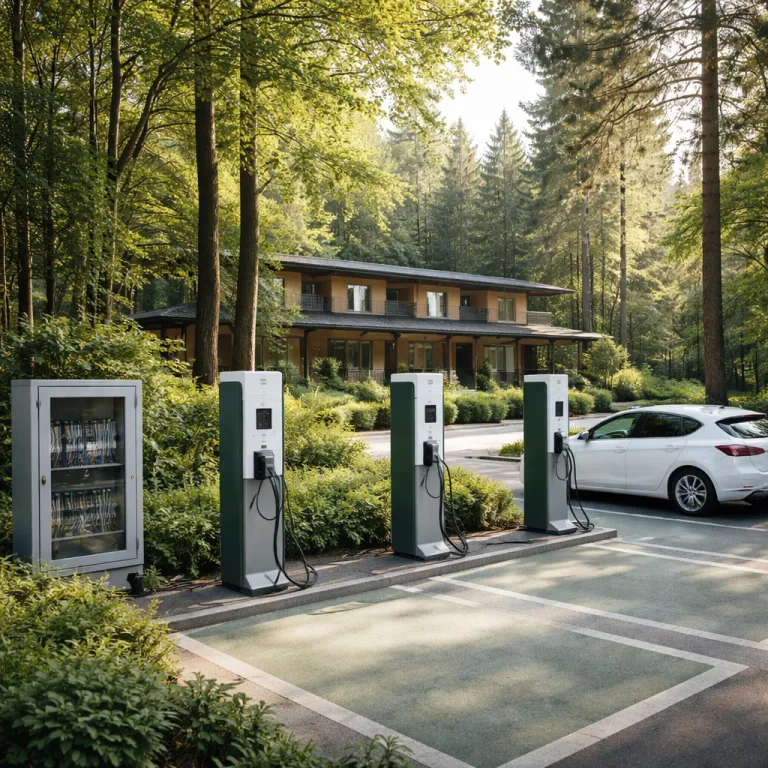
Why smart hotel EV charging technology matters for luxury stays
In high end hotels, the most valuable amenity for EV drivers is often the quietest one. Smart hotel EV charging technology works in the background so guests simply plug in, sleep, and leave with a fully charged electric vehicle. The elegance lies in how the charging infrastructure, energy management, and hospitality standards align without demanding your attention.
Behind each charger in the parking area, the hotel charging system is constantly balancing power flows and electrical capacity. Smart meters, energy management software, and IoT devices coordinate charging stations so several electric vehicles can share limited power without tripping breakers or disturbing other hotel services. A typical luxury property might run ten 11–22 kW AC chargers from a 125–160 A panel, dynamically throttling individual charge rates as occupancy and building load change. This invisible charging setup lets properties offer charging to more guests, even when the building’s original infrastructure was never designed for dozens of vehicle charging sessions overnight.
Hotel management teams now treat charging solutions as seriously as they treat spa design or room service. They work with energy providers and technology vendors to build charging infrastructure that supports sustainability goals while keeping operating costs under control. The result is a charging service that feels effortless to guests but relies on sophisticated load management, smart load controls, and sometimes even on site solar power and energy storage to keep everything running smoothly. Early adopters such as the Nordic Choice / Strawberry group and several Marriott and Hilton flagship hotels have already deployed networked EV charging platforms that integrate with property management systems, loyalty programmes, and building energy dashboards.

Load management and smart scheduling between plug in and checkout
Once you connect your electric vehicle to a charger, the real choreography begins. Smart hotel EV charging technology uses automated scheduling and smart load balancing to decide when each charging station actually delivers power. The car that arrived last might not start vehicle charging immediately, yet it will still be ready by the time its driver finishes an unhurried breakfast.
Advanced load management systems ask guests for a departure time at check in, then prioritise hotel charging accordingly. A vehicle leaving at 06.00 receives more power earlier in the night, while cars staying for longer overnight stays can charge at a lower level later, easing pressure on electrical capacity. In a simple scenario, four cars plugged into 22 kW chargers on a 44 kW shared circuit might each receive 11 kW until the first vehicle reaches its target, after which the remaining three automatically ramp up. This approach lets hotels operate ten or more chargers from a single panel, avoiding expensive grid upgrades while still offering fast charging options where they are genuinely needed.
Energy management platforms monitor every charging station, tracking power use, peak demand, and the impact on overall hotel energy consumption. One industry data point often cited is that average hotel energy consumption can reach around 50 kWh per room per day, according to research from the International Tourism Partnership and the World Travel & Tourism Council, so shaving even 20 % through smarter charging and demand response has a meaningful effect on sustainability and operating margins. In practice, this might mean shifting 30–40 % of EV load out of the evening peak, trimming demand charges and freeing capacity for kitchens, spas, and conference facilities. As one technical explainer puts it with clarity for both staff and guests: “What is smart charging? Automated energy management to optimize usage.”
For EV focused travellers choosing coastal retreats or urban landmarks, this orchestration is becoming a key selection criterion. A Caribbean property such as the refined Varadero hotel with electric car charging on the beach shows how charging stations can be integrated into relaxed resort parking without visual clutter. In such hotels charging is no longer a niche perk but a core part of the hospitality promise, where the charger is as thoughtfully placed as the sun lounger.

From car park to power plant: V2B, solar, and energy storage
The next evolution of smart hotel EV charging technology treats parked cars as flexible energy assets. Vehicle to building, often abbreviated as V2B, allows an electric vehicle connected to a charging station to feed power back into the property during peak demand. In practice, this means your car might briefly support the lobby lighting or the kitchen’s evening service while you enjoy a drink at the bar.
Forward thinking hotels are pairing V2B capable chargers with rooftop solar arrays and on site energy storage systems. During sunny hours, solar power charges both batteries and electric vehicles, while at night the energy management system can draw from stored power or even from connected cars to reduce strain on the grid. A 200 kW rooftop photovoltaic system combined with a 250 kWh battery, for example, can cover a large share of daytime EV charging and still provide backup capacity for evening peaks. This integrated charging setup supports sustainability targets without compromising guest comfort, since the software always protects a minimum charge level for every vehicle before any energy is shared.
Energy consultants and technology providers are working closely with hospitality staff to design these charging solutions so they remain invisible to guests. For the driver, the experience is still a simple charging service at a charging hotel, with clear pricing and a guaranteed minimum battery level by departure time. Behind the scenes, smart load controls, demand response programmes, and predictive analytics help properties offer charging to more guests while keeping both costs and emissions in check. Vendors such as Enel X Way, ChargePoint, and Wallbox already provide hotel specific platforms that combine charger management, tariff setting, and integration with building automation systems.
Extended stay concepts are particularly well suited to this deeper integration of charging infrastructure and building systems. Elegant long stay properties with EV charging, such as thoughtfully designed extended stay suites, can use longer parking durations to optimise when each charger draws power or returns it to the building. In these hotels charging becomes part of a broader energy strategy, not just a line item on the amenities list.

Revenue, pricing models, and what guests should ask at check in
For luxury properties, smart hotel EV charging technology is no longer just a sustainability gesture; it is a defined revenue stream. Hotels charging for electricity now experiment with per kilowatt hour billing, flat overnight fees, or tiered pricing that differentiates between fast charging and slower, more economical options. The most guest friendly models are transparent, with clear information at the charger and on the booking confirmation.
Some charging hotel operators reserve a limited number of high power charging stations for short stays or late arrivals, while directing longer overnight stays to lower power chargers that make better use of available electrical capacity. Smart load algorithms then allocate power so every electric vehicle reaches its requested charge level by the stated departure time. This allows properties to offer charging to more guests without creating queues in the parking area or friction at reception. Typical tariffs might range from complimentary 7–11 kW overnight charging for suite guests to paid 50–150 kW DC fast charging billed per kilowatt hour or per session.
As a traveller, you can secure the best charging solutions by asking a few precise questions when you arrive. Ask the front desk staff whether the hotel charging system uses scheduled charging and whether they need your departure time to optimise vehicle charging. Clarify if the charging service is complimentary or billed separately, and whether fast charging bays must be pre booked during busy periods.
It is also worth asking whether the chargers are powered partly by solar or supported by on site energy storage, especially if sustainability is a priority for you. Some properties now highlight partnerships with energy providers or technology vendors that enable zero cost or low cost charging infrastructure across several regions, a model that shows how hospitality and energy management can align commercially. For the informed guest, these details turn a simple plug in into a more meaningful part of the stay.

How to read a hotel’s EV setup like an insider
Seasoned EV travellers can assess smart hotel EV charging technology almost as quickly as they judge a lobby. Start with the basics: count how many chargers are visible in the parking area and note whether they are grouped into a dedicated EV zone or scattered near entrances. A cluster of stations with clear signage usually signals a thought through charging infrastructure rather than a token single charger.
Look at the labelling on each charging station to understand power levels and connector types. If you see a mix of medium power chargers for overnight vehicle charging and a smaller number of high power fast charging units, the hotel has likely invested in serious load management. This combination lets properties offer charging to both road trippers needing a quick top up and longer stay guests content with a slower, battery friendly charge. As a quick rule of thumb, 7–11 kW AC chargers suit overnight stays, while 50 kW and above DC chargers are designed for rapid top ups between meetings or during a brief lunch.
Inside, ask how the hotel management monitors energy use from EVs and whether they participate in any demand response programmes with local utilities. Many leading hotels now use energy management software that integrates EV charging data with overall building consumption, allowing them to adjust power flows in real time. The stated objectives are usually to reduce energy costs, enhance sustainability, and optimise power usage without affecting guest comfort.
Finally, pay attention to how confidently the hospitality staff talk about the charging setup. If reception can explain the difference between charger types, outline any smart load scheduling, and reassure you about your electric vehicle’s charge level by morning, you are in capable hands. That quiet competence is the hallmark of a property where charging solutions are treated as a core service, not an afterthought.

FAQ
What is smart hotel EV charging technology in simple terms?
Smart hotel EV charging technology refers to automated systems that control when and how much power each charger delivers to connected electric vehicles. These systems use load management, smart meters, and software to optimise energy use while ensuring every guest reaches their desired charge level by departure. The aim is to provide reliable charging service without overloading the building’s electrical capacity or inflating energy costs.
How do hotels implement smart charging without disrupting guests?
Hotels implement smart charging by installing networked charging stations linked to an energy management platform that runs quietly in the background. The software schedules vehicle charging based on factors such as arrival time, departure time, and available power, so guests only experience a simple plug in process. Hotel management teams often work with energy consultants, technology vendors, and utility companies to fine tune these systems for both comfort and efficiency.
Why is smart charging important for hotel sustainability?
Smart charging is important for sustainability because it reduces peak demand and overall energy waste from EV charging. By shifting some charging to off peak hours and integrating solar or energy storage where available, hotels can lower emissions associated with their operations. This supports broader environmental goals while still allowing properties to offer charging to a growing number of EV driving guests.
Can smart hotel charging systems save money for both hotels and guests?
Well designed smart charging systems help hotels avoid costly electrical upgrades and reduce demand charges from utilities, which can represent a significant portion of energy bills. These savings give properties more flexibility in how they price charging service, from complimentary overnight charging to fairly structured per kilowatt hour tariffs. Guests benefit from more available chargers, clearer pricing, and a higher chance of finding their electric vehicle fully charged without paying premium fast charging rates unnecessarily.
What should I ask a hotel before booking with an electric vehicle?
Before booking, ask how many chargers the property has, what power levels they offer, and whether reservations are needed for charging stations. It is also useful to ask if the hotel uses scheduled charging based on departure times and whether any fees apply for fast charging versus standard overnight charging. These questions help you gauge whether the charging infrastructure matches your travel plans and ensures a smooth, stress free stay.