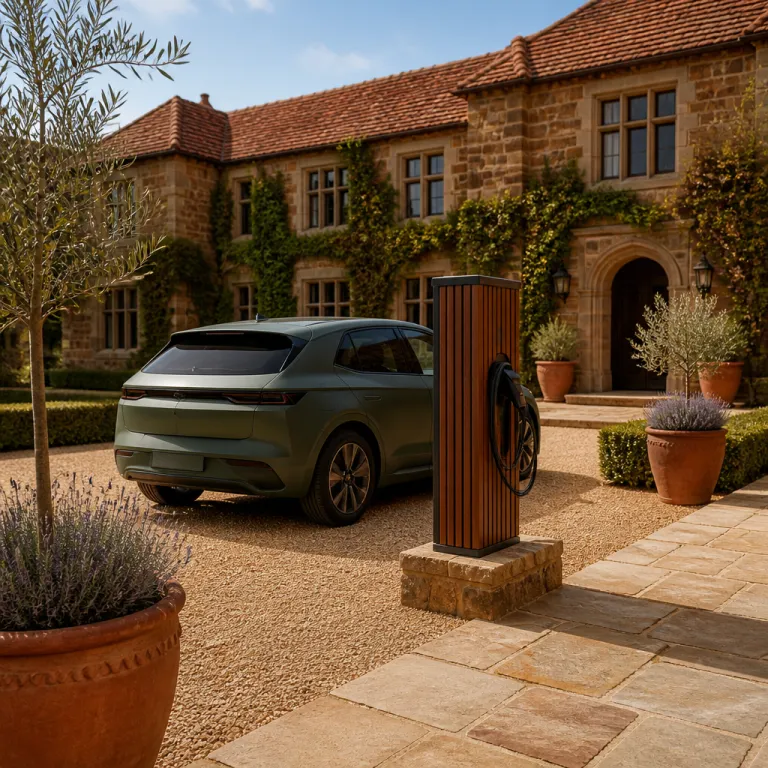
Heritage charm, hidden cables: why EV families are choosing historic stays
A growing number of heritage properties now treat EV charging as seriously as silver service. Many historic hotels understand that the real luxury for guests is arriving, plugging in near the parking area, and waking to both a full battery and a quiet garden. For an EV-driving family, a well-designed charging set-up at a listed country house or historic inn can turn a long road trip into a calm, well-paced stay.
Across the United States and Europe, owners of historic hotels are installing discreet charging stations while preserving stone façades, walled gardens, and carriage courts. Heritage hotel owners act as hands-on implementers, working with electric vehicle manufacturers and local utilities to upgrade electrical infrastructure without disturbing listed features or national heritage protections. This careful balance means guests can park close to their rooms or suites, connect to charging stations, and still feel immersed in the building’s original character.
For premium family travellers, the appeal is obvious and very practical. On-site EV facilities at a heritage hotel remove the stress of hunting for access to public chargers late at night with tired children in the back. They also turn the hotel into a true destination, where the guest experience includes both a memorable historic setting and the reassurance that the car will be ready for the next leg to a national park or coastal town.
The design challenge: where chargers live in manors, abbeys, and castles
The hardest question for many hotels is not whether to offer EV charging, but where to place the hardware without compromising heritage value. In a Georgian manor hotel, the main parking area may sit in front of a perfectly symmetrical façade, so visible charging posts could jar with the historic proportions. The most successful projects in listed buildings push the technology to the edges, tucking chargers behind hedges, along stable blocks, or beside discreet service roads, and then apply the same principles at scale across a wider estate or portfolio.
Owners of historic hotels work with planners to protect sightlines while still giving guests good access to charging stations. In some properties, the front desk will allocate specific parking bays with chargers near secondary entrances, so guests can walk through original stone cloisters or timber halls while their cars quietly charge outside. Elsewhere, hotel charging infrastructure is hidden in existing lamp posts or low walls, turning the park-like grounds into a subtle network of power points that respect the building’s age.
Families should always ask the hotel staff detailed questions before booking, because layouts vary widely. Confirm charger availability before booking, inquire about charging fees, and bring your own charging cables if your connector is unusual. For a deeper breakdown of what you actually pay to charge an EV at a luxury hotel, including heritage properties with limited parking, study a guide on real EV charging costs at high-end hotels, then compare it with recent guest reviews for your chosen destination.
The UK blueprint: Hand Picked Hotels, Roam, and invisible infrastructure
In the United Kingdom, one of the clearest examples of thoughtful EV infrastructure in historic hotels comes from the partnership between Hand Picked Hotels and Roam. According to a joint announcement by the two companies, around twenty country house hotels in this collection are adding more than one hundred chargers, typically 7–22 kW AC units, threading cables through existing ducts and service corridors rather than drilling new routes through historic stone. The result is a network of hotel charging infrastructure that feels almost invisible to the eye, yet very present on the parking map.
At these properties, guests typically find Level 2 chargers positioned near secondary parking courts, often beside converted stables or walled kitchen gardens. The front desk team manages access, allocating charging bays at check-in and sometimes staggering charging times so that every guest has a fair overnight session. This approach suits premium family travellers, because the slower pace of a country house stay matches the rhythm of overnight charging, breakfast, and a late morning departure for the next national park or coastal destination.
For owners, the preservation argument is compelling and very commercial. Well-integrated EV charging stations attract a younger, affluent demographic who might otherwise choose a modern city hotel with easier access to public chargers. Industry summaries note that “growing EV ownership”, “sustainable tourism demand”, and “hotel modernization efforts” are converging to make EV infrastructure a core part of long-term viability rather than a passing green badge, a point explored in depth in recent analysis of why EV charging is becoming one of the most visible sustainability metrics at hotels.
European heritage: châteaux, masserie, paradores and the family EV road trip
On the continent, EV charging at heritage hotels takes different forms, shaped by national rules and architectural traditions. In France, château hotels often place charging stations along tree-lined drives or beside former carriage houses, keeping the main cour d’honneur free of modern hardware. Italian masserie in Puglia may hide chargers behind whitewashed walls near the olive groves, while Spanish paradores integrate them into existing parking terraces overlooking a national park or medieval town.
For families driving across borders, these hotels become anchor points in a longer route, not just one-off stays. A parador with reliable charging and spacious rooms or suites can turn a long mountain crossing into a relaxed overnight pause, with children exploring cloisters while the car charges quietly below. In rural regions where access to public chargers is still patchy, a single well-run hotel with good charging service can shape the entire itinerary.
When comparing options, look beyond the headline that a hotel offers EV charging. Read recent guest reviews to see whether stations were working, whether the staff understood how to start sessions, and whether parking bays were blocked by non-EV cars. For a broader strategy on choosing premium hotels with reliable EV amenities, including heritage properties, consult an in-depth guide to premium hotel booking for electric vehicle drivers, then cross-check each shortlisted hotel against your route, your children’s patience, and your preferred daily driving distance in kilometres.
From stress free stays to smart bookings: how to choose the right heritage EV hotel
For EV-driving families, the best experience at a historic property starts long before arrival. When you book, email or call the front desk and ask exactly how many charging stations they have, what type of connectors are installed, and whether spaces can be reserved. Many heritage hotels now provide EV chargers, but policies vary; “Do heritage hotels offer EV charging?”, “Are there fees for hotel EV charging?”, and “What types of chargers are available?” are not abstract questions but practical prompts for your pre-stay checklist.
In the United States, data from the American Hotel & Lodging Association indicates that roughly a quarter of hotels now offer some form of EV charging, with higher concentrations in coastal states and near major national parks. That figure is rising as heritage hotel owners partner with brands such as Porsche and Tesla, installing Level 2 chargers, DC fast chargers, and Tesla Destination Chargers in ways that respect historic fabric. These methods, combined with upgraded electrical infrastructure, are designed to enhance the guest experience, support green initiatives, and keep heritage hotels competitive in a market where EV ownership is climbing steadily.
Once on site, treat the charger as part of the overall service, not an afterthought. A genuinely EV-friendly hotel will have trained staff at reception who can explain how to start a session, clear signage in the parking area, and a fair use policy that lets every guest enjoy a good overnight charge during their stay. When you find a property that balances history, comfort, and reliable charging, leave detailed reviews, because your feedback helps other families choose the right destination and encourages more heritage hotels to invest in thoughtful, future-proof infrastructure.
Quick reference for EV families staying in historic hotels
- Common connectors: Type 2 / J1772 for most Level 2 chargers; CCS or CHAdeMO for DC fast charging; Tesla Destination Chargers for Tesla vehicles (adapters may be needed).
- Typical power levels: 7–11 kW AC at many country house hotels; 22 kW AC or 50 kW+ DC fast chargers at larger resorts or roadside paradores.
- Overnight energy: Charging power (kW) multiplied by hours plugged in gives energy in kWh; for example, a 7 kW charger running for eight to nine hours can add roughly 50–60 kWh, enough to refill many family EVs from low to near full.
- Indicative costs: Some properties include charging in the room rate; others charge per kWh or per session, often in line with local public tariffs. In many destinations this can mean anything from a modest flat fee to a bill similar to using a public rapid charger for the same amount of energy.
FAQ
Do heritage hotels usually provide EV charging on site ?
Many heritage hotels now provide EV chargers, but availability is far from universal. Before you book, contact the front desk directly and ask how many charging stations they operate, what power levels they offer, and whether guests need to reserve a parking bay. This is especially important in smaller historic properties where the number of rooms and chargers is limited.
Are there typical fees for using hotel EV charging stations ?
Pricing policies vary widely between hotels, even within the same region. Some heritage properties treat EV charging as a complimentary service for overnight guests, while others bill per kilowatt hour, per hour, or per session. Always inquire about fees in advance and compare them with local public charging tariffs to understand the real cost of your stay; in practice, this can range from a small nightly supplement to a per-kWh rate similar to nearby public networks.
What types of chargers do heritage hotels usually install ?
Most heritage hotels focus on Level 2 chargers, which are ideal for overnight charging while you sleep. A smaller number install DC fast chargers, often in partnership with manufacturers such as Porsche or Tesla, to support shorter stops or day visitors. If you drive a specific brand, check whether Tesla Destination Chargers or other proprietary systems are available and whether adapters are required.
How can I be sure a charger will be available when I arrive ?
The most reliable approach is to reserve a charging bay at the time of booking, if the hotel offers that option. If reservations are not possible, ask the staff about typical occupancy patterns and whether they can note your EV needs in the guest file. Arriving earlier in the afternoon often increases your chances of finding an available space in a small historic car park.
Is it safe to charge an EV in older hotel car parks and courtyards ?
When heritage hotels install EV infrastructure, they must comply with modern electrical and safety standards, regardless of the age of the building. Reputable properties work with qualified electricians and local authorities to ensure that wiring, earthing, and weather protection meet current regulations. If you have concerns, ask the hotel to confirm that installations are certified and maintained on a regular schedule.