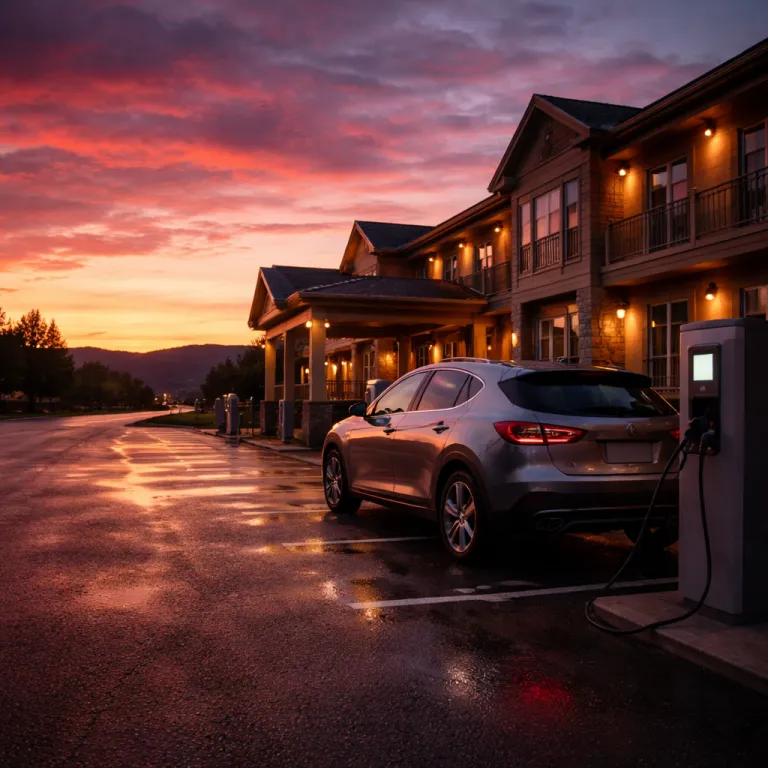
Why your EV road trip hotel charging plan changes everything
Think of your EV road trip hotel charging plan as the quiet backbone of a romantic journey. When you design the road so that the car charges while you sleep, the entire trip slows down in the best possible way and every stay feels intentional rather than improvised around a public charging station. The difference between chasing a fast charger at midnight and gliding into a calm hotel charging courtyard is the difference between endurance driving and actual travel.
Luxury minded EV drivers do not just look for hotels ; they curate a sequence of properties where hotel charging is as reliable as the breakfast service. A well planned road trip will alternate one or two fast charging sessions on the road with long, gentle level charging sessions overnight, so your miles range and your mood both stay comfortably high. That rhythm lets you treat each charging spot as part of the experience, not a chore squeezed between motorway exits and anonymous charging stations.
Behind this shift sits a growing charging infrastructure that finally respects how couples travel. Hotel operators, charging network providers and EV drivers are aligning around the idea that a charging hotel is not an amenity for a few members of a loyalty programme, but a core part of the stay for anyone driving an electric car. As more chargers move from commercial charging forecourts into landscaped hotel parking with a view, the EV road trip becomes less about range anxiety and more about choosing which terrace you want to sit on while the car takes its quiet overnight charge.
Designing a route that lets you stay, charge and sleep
The most effective EV road trip hotel charging plan starts with your realistic miles range, not the optimistic figure on the brochure. For most drivers, that means plotting charging options every 160 to 240 kilometres, then deciding which of those charging stations will be fast charging stops and which will be slower level charging sessions at hotels. This approach keeps a comfortable buffer so you arrive with enough charge to handle a closed charging spot or an occupied charger without stress.
Use route planning tools such as PlugShare, A Better Route Planner and EVRoutes to map every charging station along your chosen road, then filter specifically for hotels charging options. These tools now integrate real time données on public charging and commercial charging availability, so you can see which chargers are working, which have level fast capability and how many charging spots are on site. Once you have that map, you can choose where you want to stay, charge and linger, rather than letting the charging speed dictate every stop.
On a Pacific Coast Highway road trip, for example, you might plan one daytime fast charging stop at a coastal station, then aim for a hotel with level charging and two or three chargers in the car park so you can stay charge overnight. In the UK motorway corridor, the strategy shifts slightly ; you lean more on fast charging at service areas, then use hotels near junctions with reliable hotel charging infrastructure as your anchors. For Norwegian fjords, where the view matters as much as the range hour, you prioritise a hotel where the charger sits right by the water, so your electric car charges while you watch the light change over the mountains and read about adapter strategies in a guide to a CHAdeMO to CCS adapter for EV friendly luxury hotel stays.
Choosing hotels where charging is part of the hospitality
Once the route is sketched, the next step is to find hotels where the EV experience feels designed, not bolted on. Large groups such as Hilton, Marriott, IHG and Choice Hotels now offer filters for EV chargers, which makes it easier to locate a charging hotel that matches your preferred level of service and style. Use those filters as a starting point, then cross check each hotel charging claim on PlugShare or similar platforms to confirm the exact charger type, charging speed and number of chargers.
Look for properties where the charging spots are clearly signed, close to the entrance and reserved for guests, ideally with a view that does not feel like a back lot. A premium hotel that treats the charging station as part of its arrival sequence will usually have better maintained chargers, clearer policies for members and a front desk équipe that actually understands how to start a charge. When a hotel invests in visible charging infrastructure rather than hiding a single charger behind the bins, it signals that your electric car is as welcome as your luggage.
Before you book, email or call the hotel to confirm whether the chargers are level charging or DC fast charging, whether there is a fee and whether they are open to non guests as public charging. This is also the moment to ask how they handle occupied charging spots and whether they can move your car after a range hour or two if you are at dinner. For more detailed criteria on what separates adequate hotels charging from genuinely excellent charging options, consult a specialist guide to premium hotel booking for electric vehicle drivers that focuses on charging excellence and parking etiquette, then pair that with insights on premium parking management that explain how seamless electric car charging and parking solutions elevate a luxury stay.
Managing buffers, backups and real world charging surprises
Even the most elegant EV road trip hotel charging plan needs a margin for the messy parts of travel. Aim to arrive at each hotel with at least 20 to 30 percent charge remaining, which gives you a healthy buffer if the charging station is out of service or a non EV car is blocking the charging spot. That buffer also lets you drive to an alternative public charging location without turning a relaxed evening into a range anxiety drama.
Always identify at least one backup charging station within a short range hour drive of every planned hotel, ideally with both level fast and slower options. In dense regions such as California, Norway or the Netherlands, that might mean a mix of commercial charging hubs and municipal charging stations, while in more remote areas you may rely on a single fast charger at a supermarket or a smaller hotel that allows non resident charging. Save these alternatives in your navigation system so you can reroute quickly if the first charger fails or the charging spots are full.
Hotel operators and charging network providers are improving reliability, but the reality of driving an electric car is that you will occasionally meet a broken charger or an occupied bay. The key is to treat these moments as minor detours rather than crises by building redundancy into your plan and keeping your miles range cushion intact. As one practical guideline from current expert advice puts it, “Confirm hotel charging details before booking. Arrive with a battery buffer. Use apps to locate charging hotels.”
Real world itineraries where overnight charging makes the trip
On the Pacific Coast Highway, an EV road trip hotel charging plan can turn a classic drive into a slow, luxurious migration down the coast. You might start in San Francisco with a full charge, use a single fast charging stop near Monterey, then choose a hotel in Big Sur where level charging points sit beneath the pines and the only sound at the charging station is the ocean. The next day, a gentle drive to Santa Barbara with another stay charge at a refined hotel charging courtyard keeps both your battery and your energy high.
Across the Atlantic, a couple driving the UK motorway corridor from London to the Lake District will build a different rhythm. Here, the road itself is less romantic, so you lean on fast charging at motorway services for pure efficiency, then reserve your indulgence for a lakeside hotel where the chargers are tucked beside the gardens and the view compensates for the previous day’s driving. With a solid charging infrastructure along the main roads and careful use of hotel charging, you can arrive at each stay with enough charge to explore local villages without hunting for extra charging options.
Norway’s fjord routes show what happens when a country takes electric mobility seriously and integrates chargers into both public charging networks and hotels charging programmes. A typical itinerary might link Oslo to Bergen with one commercial charging stop on the road, then two nights at a fjord side hotel where the charger sits right by the water and the miles range you gain overnight is almost an afterthought. In all these cases, whether you drive a Tesla or another electric model, the pattern is the same ; you plug in at check in, let the car charge at a sensible level speed while you sleep and wake to a full battery, a good breakfast and a road that feels inviting rather than demanding.
FAQ
How can I reliably find hotels with EV chargers along my route ?
Use mapping tools such as PlugShare, A Better Route Planner and EVRoutes, then apply filters specifically for hotel charging and on site charging stations. Cross check each listing with the hotel website or a direct call to confirm the exact charger type, charging speed and whether the charging spots are reserved for guests. This combination of apps and direct confirmation gives you a far more reliable picture than relying on a single source.
How often should I plan charging stops on an EV road trip ?
A practical rule is to plan some form of charging every 160 to 240 kilometres, depending on your car’s realistic miles range and the terrain. Use faster public charging or commercial charging hubs for daytime top ups, then rely on slower level charging at hotels for overnight stays. This pattern keeps a healthy buffer while minimising time spent waiting at roadside chargers.
Are hotel EV chargers usually free for guests ?
Policies vary widely between hotels and even between properties in the same group, so never assume that hotel charging is complimentary. Some luxury hotels offer free level charging for overnight guests, while others charge per range hour or per kilowatt hour, and a few treat their chargers as paid public charging for non residents. Always ask about pricing, access hours and any need to move the car once the charge is complete.
What should I do if the hotel charger is occupied or not working ?
Arrive with enough charge to reach an alternative charging station, ideally one you have already saved in your navigation system. Check nearby public charging locations or other hotels charging facilities on PlugShare or similar apps, then move the car as soon as you have a safe buffer for the next day’s driving. If the issue is an occupied charging spot, speak to reception ; many hotels keep contact details for guests using the chargers so they can free the bay when their charge is complete.
How much battery buffer should I keep between charging stops ?
For relaxed travel, aim to arrive at each planned charging station or hotel with at least 20 to 30 percent remaining, more in winter or in mountainous regions. This buffer protects you against detours, weather related range loss or unexpected charger outages without forcing you into constant fast charging. Couples on longer trips often find that this margin keeps the journey calm and leaves room for spontaneous side roads without constant calculations.
Sources
US Department of Energy ; PlugShare ; A Better Route Planner.