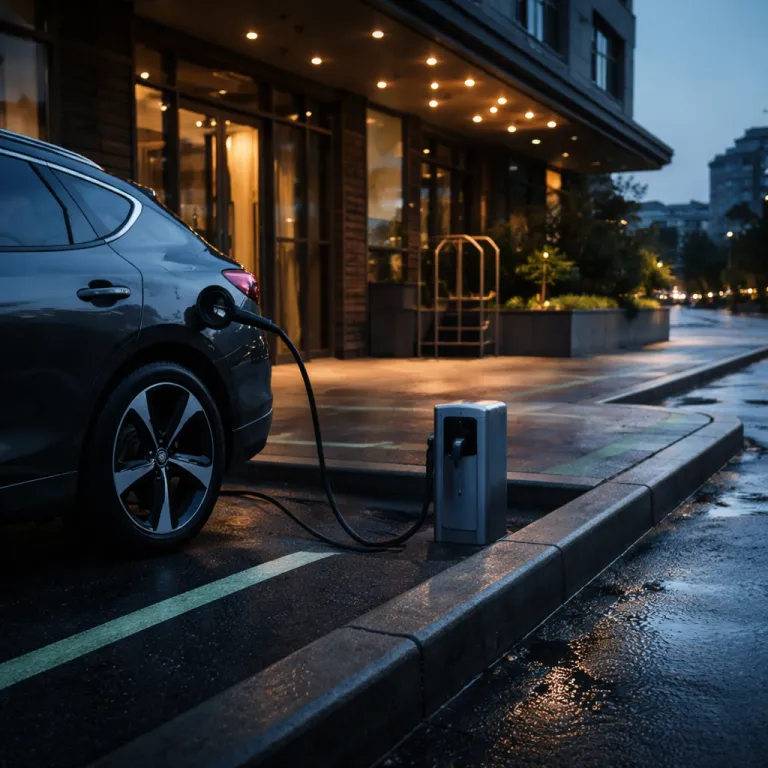
Urban city hotel EV charging as a new check in essential
For EV drivers, urban city hotel EV charging now matters almost as much as Wi‑Fi. In dense downtown districts where parking is scarce and traffic never really sleeps, the right property can turn an anxious arrival with an electric car into a seamless glide from valet to elevator. The best charging hotels treat the plug as part of the welcome, not an afterthought in a distant parking structure.
Only a minority of hotels’ electric infrastructure is truly ready for this shift, which is why careful planning pays off before you travel. A 2023 American Hotel & Lodging Association survey, for example, found that roughly one in four U.S. hotels offers some form of EV charging, and separate research from J.D. Power in 2023 reported that EV‑related bookings and guest interest in on‑site charging have risen sharply as electric vehicles move into the mainstream. Urban properties often lag because city grids are constrained, parking is shared, and every extra charging station competes with revenue‑generating spaces.
Specialist partners such as Urban EV, KeyWatt, and MSI Hospitality & Destination now help hotels’ charging strategies move from pilot projects to polished guest amenities. Their consulting teams design on‑site charging options that feel intuitive for guests, from clear signage at the parking entrance to simple payment flows that avoid app clutter and card confusion. The innovation focus is on seamless car charging where a guest can plug in once, head to the indoor pool or the bar, and return to a fully charged electric vehicle without thinking about kilowatt hours, connector standards, or tariff structures.
Valet charging and the quiet luxury of never touching the cable
In the most forward‑thinking city properties, valet charging is becoming the new gold standard for urban hotel EV amenities. You arrive at the hotel porte cochère, hand over the keys, and the valet team handles every detail of the electric car handoff, from locating the right charging station to timing the charge so the vehicle is ready when you are. For business‑leisure travelers who count every hour, this is the difference between a rushed detour to public charging and a calm check in followed by a swim in the indoor pool.
At some luxury hotels’ electric programs, the valet desk operates almost like a miniature control room for energy and parking. Staff track which chargers are free, which guests need fast charging before an early meeting, and which electric vehicles can top up slowly overnight while their owners enjoy a long dinner in the city. This is where partners such as Urban EV and KeyWatt step in with management software that keeps chargers, reservations, and pricing availability aligned with real‑time guest needs.
Brands like Hilton, Marriott, Embassy Suites, and Hampton Inn are experimenting with different valet models, from complimentary charge sessions for elite guests to bundled weekend getaway packages that include guaranteed car charging. A concrete example is the Hilton San Francisco Union Square, which reports more than a dozen Level 2 AC chargers (typically around 7–11 kW) in a managed garage, with valet staff rotating vehicles as they reach a full charge and applying standard hotel parking rates plus a per‑session charging fee. Some properties even integrate EV arrival into the wider arrival choreography, using pre‑arrival notes and digital check in to flag electric vehicles so the most polished hotels’ charging experiences feel almost invisible, because the guest never has to call the hotel to ask where the chargers are or whether the stations are blocked by non‑EVs.
Shared garages, public charging and the reality of city space
Many urban hotels sit above or beside multi‑use parking garages, which complicates city‑center EV charging for both operators and guests. A single underground structure might serve offices by day, residents at night, and hotel guests around the clock, with only a handful of chargers to share between all those electric vehicles. In this environment, the difference between a thoughtful hotel and a careless one is whether those chargers are reserved, signposted, and actually usable when you arrive.
Some charging hotels negotiate dedicated bays within shared garages, clearly marked as hotel EV parking with access controlled by room key or valet staff. Others rely on public charging within the same structure, which can work well if the charging stations are numerous, reliable, and supported by fast charging hardware for drivers who only have an hour before their next meeting. When chargers are shared with the public, the hotel’s role becomes advisory, guiding guests to the right level of charge for their planned miles and suggesting off‑peak times when more stations are free.
High‑end properties that lack on‑site chargers sometimes partner with nearby DC hubs, offering maps, walking directions, or even short shuttles to external charging options. This model is common in dense city cores where every square metre of parking is precious, and where solar energy installations on rooftops are already spoken for by other building systems. For a deeper look at how resort‑style properties handle these trade‑offs, you can compare published case studies of EV charging at luxury resorts with the tight geometries of downtown garages, noting how charger counts, parking layouts, and guest policies differ between sprawling campuses and vertical city hotels.
How to read listings and verify what you will actually plug into
Online booking platforms now let you filter for urban city hotel EV charging, but the reality behind those icons can be messy. A hotel might tick the box for chargers because there is a single slow charging station in a distant corner of a public garage, shared with dozens of electric vehicles from nearby offices. Another property might understate its capabilities, offering multiple on‑site charging stations with valet management and clear pricing availability, yet describing them only as generic parking amenities.
Before you commit to a city stay, treat the listing as a starting point and then call the hotel directly with precise questions. Ask how many chargers they operate, whether those chargers are reserved for hotel guests, and what type of charging station hardware is installed, from standard Level 2 AC posts (typically 7–11 kW) to genuine fast charging units (50 kW and above). Clarify whether car charging is free, billed per hour, per kilowatt hour, or bundled into a parking fee, and whether hotels’ electric policies prioritise overnight guests over day visitors from nearby offices.
For complex itineraries that combine several cities and long highway stretches, build your route around reliable charging hotels rather than chasing last‑minute public charging. A practical way to do this is to plan an EV road trip using hotel charging stops, using specialist EV travel guides or route planners to sequence your nights around dependable plugs. When you treat the charger as a core part of the hotel product, you reduce the risk of late‑night detours, empty batteries, and missed morning meetings.
Business leisure priorities: from boardroom to pool with a full battery
For the executive who blends meetings with a weekend getaway, urban city hotel EV charging is not a sustainability statement, it is time management. You want to arrive from the airport, hand over the electric car, and head straight to the suite or the indoor pool without thinking about kilowatt hours or parking logistics. The most effective hotels’ charging strategies recognise that your schedule is built around client dinners, early flights, and perhaps a late checkout, not around the opening hours of a distant charging station.
Brands such as Hilton, Marriott, Embassy Suites, and Hampton Inn are gradually weaving EV amenities into their business‑focused properties, from suites Hilton locations with dedicated EV bays to city hotels’ electric packages that include guaranteed overnight charge sessions. Some offer tiered options where loyalty members receive free or discounted charging, while other guests pay transparent fees that reflect local energy costs and garage leases. In many city centres, for instance, a typical Level 2 session might be priced between the equivalent of a few dollars per hour and a flat overnight rate, with DC fast charging billed at a higher per‑kilowatt‑hour tariff.
Specialist providers like Urban EV, KeyWatt, and MSI Hospitality & Destination support this shift with systems that make it easy for staff to manage chargers without technical drama. Their innovation focus is clear and simple: seamless guest charging experiences without apps or cards. When that technology is paired with thoughtful human service, the result is a city hotel where you can skip lengthy content about green labels, focus on your meetings, and still wake up with both your battery and your body fully recharged for the next miles of your journey.
FAQ
Do all urban hotels offer EV charging for guests ?
Not all city properties provide EV charging, and availability varies widely between hotels. Some operate multiple on‑site charging stations reserved for guests, while others rely on nearby public charging or have no chargers at all. Always check the listing carefully and then call the hotel to confirm the exact charging options before you book.
Is there usually an extra fee to charge an electric car at a hotel ?
Policies differ by brand and by city, with some hotels offering free charging for loyalty members or premium room categories. Other properties bill per kilowatt hour, per charging session, or bundle the cost into a nightly parking fee. Ask the front desk for clear pricing availability so you know whether your charge will be complimentary or added to the bill.
Can I reserve a hotel charging spot in advance for my stay ?
Some charging hotels allow guests to reserve a charger when booking, especially in properties with only a few stations. Others operate on a first‑come, first‑served basis, sometimes managed by valet teams who rotate vehicles as they reach a full charge. If your schedule is tight, contact the property early and request a note on your reservation about EV charging needs.
What should I ask a city hotel before arriving with an electric vehicle ?
Clarify whether chargers are on‑site or in a separate garage, and whether they are reserved for hotel guests or shared with the public. Ask how many chargers exist, what type of connectors and speeds they offer (for example, Type 2 AC or CCS fast charging), and whether staff will move the car when the charge is complete. Confirm the parking location, any time limits per hour, and whether overnight charging is guaranteed for your stay.
How can I plan an EV road trip that relies on hotel charging ?
Start by mapping your route around cities where hotels’ electric infrastructure is more developed, then shortlist properties that list multiple chargers and clear policies. Use specialist EV travel guides to identify reliable charging hotels at intervals that match your vehicle’s range in miles. Combine this research with direct calls to each hotel so you arrive confident that a working charger awaits at the end of every driving day.