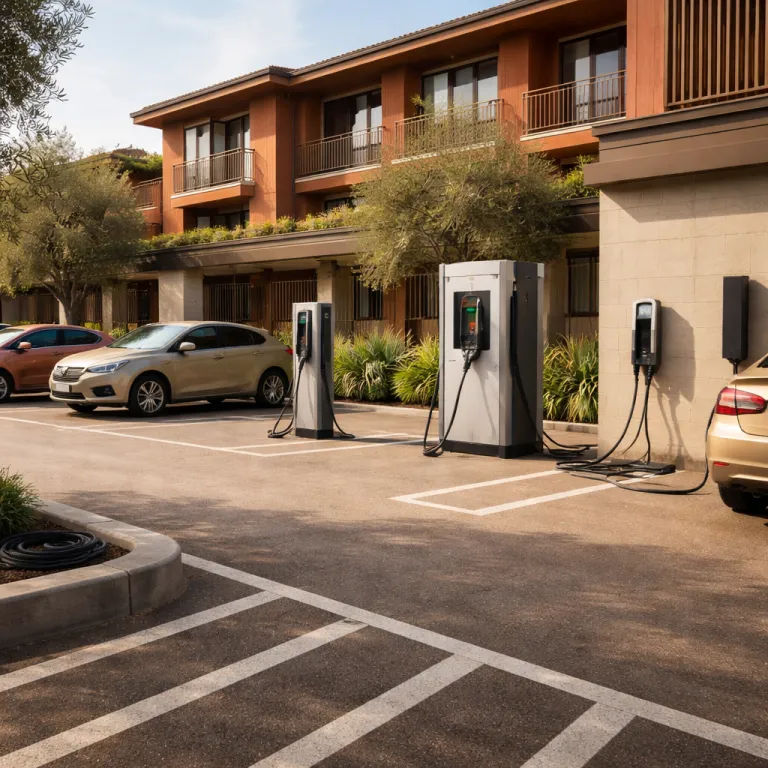
Hotel EV charger types explained for real-world overnight stays
When you book a luxury hotel with EV charging, the charger type quietly determines your entire departure day. A polished lobby and fine linens mean little if your electric vehicle leaves the charging stations with only half a battery and limited driving range. Understanding hotel EV charger types explained in practical terms lets you match your stay, your schedule, and your vehicle.
Most hotels now offer a mix of chargers, but the reality behind the marketing is uneven. In practice, properties typically provide Level 1, Level 2, and sometimes DC fast chargers, yet the charging level is rarely spelled out clearly in booking engines. For EV driving guests, the difference between a basic level charger and a bank of fast chargers is the difference between a relaxed breakfast and a rushed hunt for public charging.
Level 1 charging uses a standard household socket and adds roughly 2 to 5 miles of range per hour of charge, depending on the vehicle and local voltage. That charging speed is acceptable only when guests stay multiple nights or leave their electric vehicles parked for very long durations. For a single night at a premium charging hotel, Level 1 rarely delivers a full charge unless your vehicle battery is already near full or you drive a plug-in hybrid with a small pack.
Level 2 charging, by contrast, is where most luxury hotels are now investing. The U.S. Department of Energy’s Alternative Fuels Data Center (AFDC) notes that typical Level 2 charging speed is around 10 to 30 miles of range per hour, which aligns with real-world 7 to 11 kilowatt chargers. Over an eight-hour night, that hotel charging setup can comfortably take many electric vehicles from a low state of charge to a near full battery.
DC fast charging, sometimes called rapid charging, is still rare directly on hotel premises. AFDC guidance cites DC fast charging speed at roughly 60 to 100 miles of range in about 20 minutes for many modern EVs, which suits en route stops more than quiet overnight stays. For most hotels, the energy infrastructure, power capacity, and installation cost of these fast chargers make them a niche amenity rather than a standard feature.
Level 1, Level 2 and DC fast charging in hotel contexts
Think of Level 1 as emergency charging, Level 2 as the overnight sweet spot, and DC fast charging as the road trip sprint. When you see hotel EV charger types explained in listing details, translate each level into actual charging time and departure readiness. A business leisure traveler extending a trip cannot afford to misjudge the charging level and leave with an undercharged electric vehicle.
Level 1 charging stations use the same connector as a domestic socket and deliver very low power, typically around 1 to 1.9 kilowatts. For a large battery electric vehicle, you might gain only 16 to 40 miles of range over a full night, which is barely enough for airport transfers and short meetings. Analyses of how Level 1 Chevy Bolt charging shapes luxury hotel stays show why relying on this level charger can feel limiting for demanding itineraries.
Level 2 chargers, usually running at 240 volts AC, are the workhorses of hotel charging. They balance charging speed, installation complexity, and energy demand in a way that suits both hotels and guests. With roughly 10 to 30 miles of range added per hour, a Level 2 charger gives most electric vehicles a full charge between check-in and breakfast, especially for battery sizes in the 60 to 80 kilowatt-hour range.
DC fast chargers, sometimes branded as fast chargers or rapid charging units, use direct current and much higher power, often 50 kilowatts and above. They can take many electric vehicles to 80 percent in 20 to 60 minutes, but that faster charging comes with more heat, more stress on the battery, and higher costs for hotels. For this reason, many properties position DC fast charging off site through public charging partners rather than on their own parking decks.
For Tesla vehicles, the picture is evolving quickly as connector standards converge. Hilton, for example, announced a rollout of up to 20,000 Tesla Universal Wall Connectors at 2,000 hotels in North America starting in 2024, units that function as Level 2 chargers but work with both Tesla and non-Tesla vehicles through a shared connector. When you see these charger types listed, you can expect reliable hotel charging with a familiar plug and predictable charging speed.
Connector standards, Tesla compatibility and real booking checks
Connector standards matter as much as charging level, especially when you cross borders or switch vehicle brands. In North America, most non-Tesla vehicles use the CCS connector for fast charging, while Tesla vehicles historically used a proprietary plug now evolving into the NACS standard. In Europe, Type 2 connectors dominate AC charging, and CCS handles most fast charging, so guests must align their cables and charging options with local norms.
When you review hotel EV charger types explained on a booking site, look for explicit mention of connector types, not just vague references to chargers. A precise listing might state two Type 2 Level 2 chargers at 11 kilowatts and one CCS rapid charging station at 50 kilowatts, which immediately tells you the likely charging time. If the description only says electric vehicle charging available, contact the hotel directly and ask the front desk or management for exact charger types and connector details.
Tesla drivers should pay close attention to whether a property offers Tesla destination chargers, generic Type 2 chargers, or a mix of both. A Tesla-specific charger will usually deliver reliable Level 2 charging, but a Type 2 charger may require an adapter for some Tesla vehicles depending on the region. In both cases, confirm whether the hotel charging is free for guests or billed per kilowatt-hour, per session, or per night.
For urban stays, especially in dense cities, you may find that the hotel relies on nearby public charging stations rather than on-site power. In that scenario, ask about reserved spaces, overnight access, and whether the hotel can valet your electric vehicle to and from the public charging. Guides to seamless travel with electric car charging hotels in New York illustrate how premium properties integrate public charging into a curated guest experience, with valet staff moving vehicles between curbside DC fast chargers and underground parking.
Always bring your own cable, even when hotels promise fully equipped charging stations. Industry guidance on EV travel consistently answers the question “Do I need to bring my own charging cable?” with the same advice: it is advisable to bring your own, as availability varies. That simple step protects you from incompatible connectors, missing cables, or damaged equipment that could otherwise derail your charging hotel plans.
Why Level 2 is the quiet hero of luxury EV hotel stays
For most high-end travelers, Level 2 is the ideal balance between convenience, battery health, and hotel infrastructure. You plug in at check-in, enjoy dinner and sleep, and wake up to a full charge without thinking about charging time or charging speed. This rhythm suits both long-range electric vehicles and plug-in hybrids, especially when the chargers are located close to reception or valet points.
From the hotel side, Level 2 chargers draw manageable power from existing energy systems while still offering meaningful range overnight. They allow several vehicles to share the available power without overloading circuits or requiring industrial-scale upgrades. Smart charging systems can stagger charging, adjust power by charging level, and prioritise vehicles that need a faster charging window before early departures.
Guests benefit from this balance because Level 2 charging stations are usually easier to reserve and more predictable than public charging. A property that clearly lists hotel EV charger types explained in its pre-arrival communication, including the number of Level 2 chargers and any time limits, sets realistic expectations. That transparency reduces friction at check-in, especially when multiple guests arrive with electric vehicles and limited time.
For business leisure travelers, the key question is whether a single night will deliver a full charge. With a typical 11 kilowatt Level 2 charger, an electric vehicle arriving at 20 percent can often reach near full charge in eight to ten hours, depending on battery size and onboard charger limits. If your schedule is tighter, ask the hotel whether they can move your vehicle between chargers or offer valet rotation to maximise faster charging for early departures.
Hotels that treat EV amenities as part of their core guest experience, not just a sustainability badge, tend to communicate better. They specify charger types, clarify whether charging is free or billed, and train staff to handle basic troubleshooting. Case studies on premium hotel booking for electric vehicle drivers show how these details turn a simple charging hotel into a reliable base for complex itineraries.
When to seek DC fast charging and how to read listing specs
There are moments when Level 2 is not enough, even at the most attentive hotels. If you arrive late with a nearly empty battery and plan to leave before dawn, the available charging time may not support a full charge on a standard Level 2 charger. In that case, combining hotel charging with a short DC fast charging stop nearby can restore your range without compromising your schedule.
Start by checking whether the hotel partners with any public charging networks that offer fast chargers close to the property. Some hotels provide maps, RFID cards, or app recommendations that integrate public charging into your route, especially along major corridors. If the hotel EV charger types explained in the listing mention DC fast charging on site, verify the actual power rating, as rapid charging can mean anything from 25 to 350 kilowatts.
When reading specifications, focus on three numbers: kilowatts, number of chargers, and any time limits. Kilowatts tell you the maximum power and therefore the potential charging speed, while the number of chargers reveals how many electric vehicles can charge simultaneously. Time limits, such as four-hour caps on fast chargers, indicate whether you can rely on a full charge or should plan for a top-up only.
Pay attention to whether the hotel describes charging as complimentary or paid, and whether free charging applies only to certain charger types. A property might offer free Level 2 hotel charging for overnight guests but charge a premium for DC fast charging sessions. Clarify whether parking fees are separate from charging fees, as this can materially change the total cost of your stay.
Finally, remember that not all fast chargers are equal in real life. A 50 kilowatt unit will deliver slower rapid charging than a 150 kilowatt one, especially for large battery electric vehicles. Your vehicle may also limit faster charging as it approaches a high state of charge, so plan to leave DC fast charging stations once you have enough range to reach your next destination comfortably.
Practical booking checklist for EV focused hotel stays
Before you confirm any reservation, treat the charging hotel details with the same scrutiny you give room categories and spa menus. Start by listing your vehicle battery size, expected arrival state of charge, and required range at departure. With those numbers, you can translate hotel EV charger types explained in marketing copy into real charging time and realistic outcomes.
Contact the hotel directly and ask specific questions about chargers, not just whether they have electric vehicle amenities. Request the number of chargers, their charging level, power rating in kilowatts, connector types, and whether they are reserved for guests or shared with the public. Ask whether charging is free, metered, or billed as a flat fee, and whether valet staff can move vehicles to maximise access to fast chargers or Level 2 units.
Check whether the hotel has any maintenance schedule or downtime planned for its charging stations during your stay. Hotels manage installation, maintenance, and guest usage periods, so occasional outages are inevitable. A quick email to hotel management can confirm that the chargers will be operational and that energy supply is stable during your dates.
On arrival, inspect the chargers for clear signage, safe cable management, and visible emergency cut-offs. Confirm that your vehicle recognises the charger, that the connector fits securely, and that the charging speed displayed matches expectations for the stated charging level. If anything seems off, notify the front desk immediately so they can coordinate with their EV charger manufacturers or installation contractors.
Finally, treat EV charging as part of your overall route planning rather than an afterthought. Combine reliable hotel charging with strategic public charging stops, especially when crossing regions with sparse infrastructure. With a thoughtful approach, you can turn every stay into a seamless sequence of full-charge departures, efficient energy use, and quietly confident electric travel.
FAQ
What types of EV chargers do hotels usually provide ?
Most hotels that support electric vehicles provide a mix of Level 1 and Level 2 chargers, with Level 2 being the most common for overnight stays. Some higher-end properties or highway hotels may also offer DC fast chargers, either on site or through nearby partners. Always confirm the exact charger types, power ratings, and connector standards before you arrive.
Is hotel EV charging typically free for guests ?
Pricing policies vary widely between hotels and regions. Some properties treat hotel charging as a complimentary amenity for overnight guests, while others charge per kilowatt-hour, per session, or as a flat nightly fee. Ask whether parking charges are separate from charging fees, and request a written confirmation of costs when you book.
How long does it take to charge an electric vehicle at a hotel ?
Charging time depends on the charger level, power output, and your vehicle battery size. On a typical Level 2 charger, many electric vehicles gain roughly 10 to 30 miles of range per hour, which usually allows a near full charge overnight. Level 1 charging is much slower and may only suit very small batteries or multi-night stays, while DC fast charging can deliver a substantial top-up in under an hour.
Should I bring my own charging cable to a hotel ?
Yes, you should always travel with your own charging cable and any necessary adapters. Hotel equipment can vary, and cables may be missing, damaged, or incompatible with your specific vehicle. Bringing your own cable ensures you can use both hotel chargers and many public charging stations without relying on local hardware.
How can I verify charger availability before I arrive ?
The most reliable method is to contact the hotel directly and speak with the front desk or management. Ask whether chargers can be reserved, how many electric vehicles they can accommodate at once, and whether there are peak times when chargers are usually occupied. For critical trips, consider booking properties with multiple chargers or nearby public charging options as a backup.
References : International Energy Agency; U.S. Department of Energy Alternative Fuels Data Center; European Alternative Fuels Observatory; Hilton / Tesla Universal Wall Connector deployment announcements.