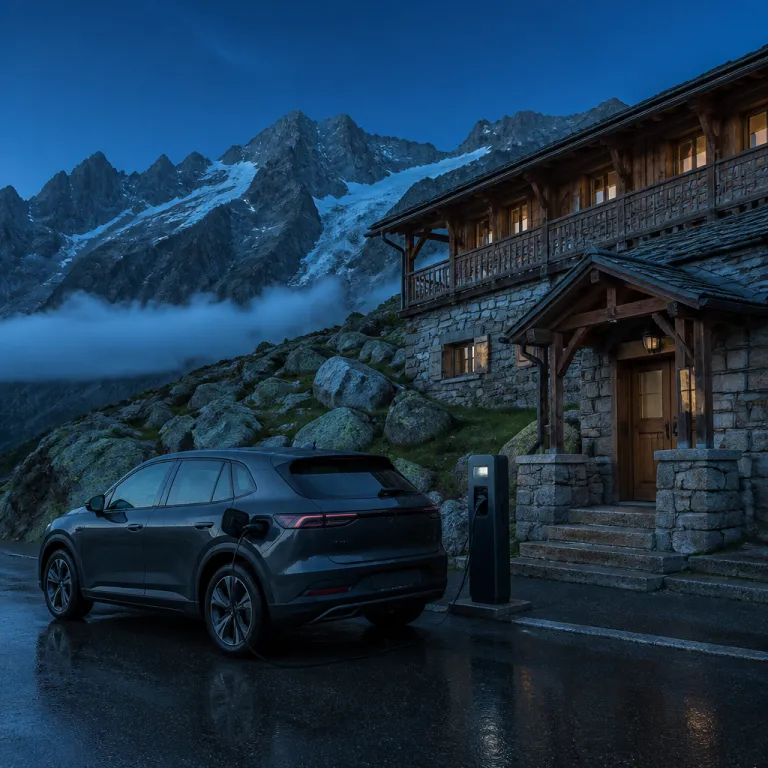
Alpine mountain hotel EV charging at altitude: what really matters this ski season
Alpine mountain hotel EV charging at altitude: what really matters this ski season
Winter in the high alpine region is glorious, but it is unforgiving for any electric vehicle. Cold air, steep mountain roads and loaded ski racks all combine to cut range while you climb towards your chosen mountain resort. If you are planning a family ski trip, the right high-altitude hotel charging setup can make the difference between a relaxed arrival and a nervous crawl to the next charging station.
Energy use rises sharply as you mount long gradients, especially on the final approach to a ski area or valley resort. Regeneration on the way down helps, yet most drivers underestimate how much extra charge electric cars need to reach a high level lodge with luggage, children and winter tyres. That is why the most reliable alpine hotels now pair sheltered parking with on site charging stations, so your electric vehicle can warm its battery slowly overnight instead of relying only on fast charging in a busy parking lot down in the city mountain.
Across Europe, public charging points now support cross country touring, but the real luxury in north America and in the Alps is still a guaranteed hotel charging station right where you park. Industry statistics from the European Alternative Fuels Observatory and national tourism boards confirm that thousands of properties now list EV facilities, and that high-altitude hotels are steadily adding chargers each season. As one industry summary puts it clearly, “Are there alpine hotels above 1,500 meters with EV charging? Yes, several alpine hotels above 1,500 meters offer reliable EV charging facilities.”
Where to stay above 1,500 meters: specific mountain resorts with serious chargers
Several high altitude properties now treat EV charging as core infrastructure, not a marketing flourish. In Switzerland, Riffelalp Resort 2222m above Zermatt and Sunstar Hotel Arosa both offer dedicated charging stations, with Tesla compatible plugs positioned close to the main lodge entrance according to their official hotel information. Riffelalp typically provides multiple 11–22 kW AC wallboxes with Type 2 sockets, while Sunstar Arosa combines hotel-operated AC chargers with access to nearby public DC fast chargers in the village. Guests arrive from long days of skiing or country skiing and simply park, plug in and head straight for the bar while their electric vehicle quietly climbs back to a healthy battery level.
Over in Villars sur Ollon, Chalet Royalp Hotel & Spa integrates high-altitude EV charging into a covered parking area, which is a real advantage when snow is blowing across the slopes. The chargers sit near the ski room, so families can unload skis, boots and bags in one sheltered stop before walking inside the resort. Chalet Royalp generally offers several 11 kW AC points that can be reserved with the room, often billed per night rather than per kilowatt hour. In Italy, Vigilius Mountain Resort above Lana and VRetreats Cervino in Breuil Cervinia both sit well above 1,500 meters, and each has invested in reliable charging networks that support guests arriving from long cross country drives through several country borders. Vigilius focuses on 11–22 kW AC hotel chargers with Type 2 connectors, while VRetreats Cervino combines on site AC charging with access to regional DC fast charging hubs in the valley.
These hotels understand that a premium ski resort experience now includes predictable charging, not just polished service and a good spa. Policies differ though, so always confirm whether they charge electric guests a flat fee per night or bill per kilowatt hour before you pass the free cancellation date. Ask how many charging bays are available, whether you need to reserve a specific time slot, and if non-guests from the ski area can also use the equipment. For broader context on how luxury brands are partnering with infrastructure providers, the story of zero cost hotel charging across several United States regions on this piece about a major multi state partnership offers a useful comparison for anyone used to driving between Salt Lake City, Park City and the Utah ski resorts.
| Hotel | Approx. altitude | Charging type | Typical power | Guest access |
|---|---|---|---|---|
| Riffelalp Resort 2222m (Zermatt, Switzerland) | 2,222 m | AC wallboxes, Tesla compatible | 11–22 kW AC | On site, usually for overnight guests |
| Sunstar Hotel Arosa (Arosa, Switzerland) | ~1,800 m | Hotel AC chargers plus village DC | Up to 22 kW AC, higher via public DC | Hotel guests, with nearby public options |
| Chalet Royalp Hotel & Spa (Villars sur Ollon, Switzerland) | ~1,300 m | Covered AC charging points | Around 11 kW AC | Reservable with room in many cases |
| Vigilius Mountain Resort (Lana, Italy) | ~1,500 m | Hotel AC chargers, Type 2 | 11–22 kW AC | On site for staying guests |
| VRetreats Cervino (Breuil Cervinia, Italy) | ~2,000 m | AC hotel chargers plus valley DC | Up to 22 kW AC, higher via hubs | Hotel parking with regional network nearby |
Planning your winter route: from valley fast charging to quiet lodge parking
Range anxiety in the Alps usually appears in the last 40 kilometres, when the road tilts upwards and the temperature drops. Smart winter planning means using high power fast charging in the valley, then relying on slower hotel charging stations at your chosen mountain resort to balance the battery gently overnight. Think of the public charging networks as your daytime backbone, and high-altitude hotel EV charging as the calm, reliable end of day top up.
On popular routes into Switzerland and northern Italy, you will find dense charging networks along the main autoroutes and in larger city mountain hubs such as Chur or Bolzano. The gaps appear once you leave these corridors and head towards a single ski area or smaller valley resort, where one busy charging station in a supermarket parking lot might be your only public option. Booking a hotel like Riffelalp Resort 2222m or Vigilius Mountain Resort with on site chargers removes that uncertainty, because you know your electric vehicle will be ready for both skiing and cross country excursions the next morning.
Cold weather is the main technical challenge for high-altitude EV charging, because lithium ion batteries lose efficiency as temperatures fall. Expect your range to drop on the way to a ski resort, especially if you run cabin heating high for a family and carry roof boxes full of ski gear. In contrast, late spring and summer bring milder temperatures that improve efficiency, making it easier to link several mountain resorts in one cross country itinerary without constant charging stops.
When planning your route and seasonal strategy, use a simple checklist:
- Plan a final fast charging stop in the valley before the main climb.
- Arrive at your alpine hotel with a comfortable buffer for unexpected detours.
- Rely on overnight AC charging at the lodge to restore range gently.
- In winter, allow extra capacity for heating, snow and slower speeds.
- In summer, use the improved efficiency to link several passes in one day.
Seasonal strategy: winter range, summer advantages and how to choose your alpine EV hotel
When comparing properties, look beyond the green label and ask precise questions about the charging level and hardware. How many charging stations are available, are they shared with day visitors to the ski areas, and is the parking lot reserved for overnight guests or open to the general public from the nearby city mountain. Clarify whether the lodge offers Type 2 or CCS plugs, whether fast charging is available or only slower AC, and how access works if you arrive late after a long drive from north America or from a Utah style road trip between park city style towns in the Alps.
Families should also consider practical details such as where the chargers sit relative to the ski room and how easy it is to park and unload children and luggage. A well designed mountain resort will place chargers close to the entrance, with clear snow clearing so you do not block traffic while you plug in your electric vehicle. Ask whether the hotel can pre-heat or pre-condition your car while it is plugged in, and whether there is a time limit on each charging bay. For readers interested in how other regions handle similar challenges, the in depth overview of EV friendly hotels across Asia on this global EV hotel guide shows how different countries and resorts are adapting their infrastructure to seasonal demand.
Before you confirm a booking, run through a short reservation checklist with the hotel:
- Confirm the number of EV charging bays and whether you must reserve a slot.
- Ask if charging is billed per night, per kilowatt hour or per session.
- Check plug types (Type 2, CCS, Tesla compatible) and maximum power.
- Verify access rules for non-guests from the ski area or nearby village.
- Request details on snow clearing, covered parking and pre-conditioning options.
FAQ
Are there alpine hotels above 1,500 meters with reliable EV charging?
Yes, several high altitude properties such as Riffelalp Resort 2222m, Vigilius Mountain Resort and VRetreats Cervino offer reliable EV charging above 1,500 meters. These hotels provide on site charging stations in their parking areas, so guests can plug in on arrival. Availability can still be limited, so always reserve a charging spot when you book your room.
Do alpine hotels usually charge extra for using their EV charging stations?
Policies vary widely between resorts, even within the same country or ski area. Some mountain resorts include a certain amount of charging in the room rate, while others bill per kilowatt hour or per charging session. The safest approach is to ask the lodge directly about fees, access hours and any need to move your vehicle once charging is complete.
Is EV charging infrastructure reliable in remote mountain villages during winter?
Many alpine hotels have invested in robust charging networks precisely because public options can be scarce in remote ski areas. Reliability is generally high at well managed properties, where chargers are maintained like any other critical guest facility. Still, winter storms and grid constraints can affect supply, so it is wise to arrive with a comfortable battery buffer from a valley fast charging stop.
How should I plan my EV route for a family ski trip to the Alps?
Plan your route around a mix of public fast charging in the valleys and slower hotel charging at your final mountain resort. Aim to reach the last high power charging station with enough range to climb to your lodge even in cold conditions. Book a hotel with confirmed on site chargers, and check whether the parking lot is reserved for guests so you can plug in overnight without stress.
Are alpine EV friendly hotels also suitable for summer hiking and cross country trips?
Yes, the same high-altitude hotel EV charging infrastructure that serves winter skiing snowboarding guests works perfectly for summer hiking and cross country touring. In warmer months, your electric vehicle will usually achieve better range, allowing longer drives between charging stops. Many resorts stay open year round, so you can use them as comfortable bases for exploring several mountain passes and valleys in a single trip.