Heritage hotel EV charging in Europe: where history meets kilowatts
Heritage hotel EV charging in Europe now shapes how many couples plan a romantic road trip. The most forward thinking hotels treat the electric car as another cherished guest, tucking chargers beside carriage arches or into a walled park so the technology never shouts over the stonework. You arrive with an electric vehicle, hand over the keys at reception, and the concierge quietly handles car charging while you head for the bar.
Across Europe, historic house hotel properties are threading cables through old service tunnels and former stables to create discreet charging stations that respect fragile façades. Listed building rules mean every charging station, cable run, and lighting column must be justified to conservation officers, so the best solutions hide chargers behind hedges, in screened parking courtyards, or deep in the car park. This is where heritage hotel EV charging really excels, because generous grounds and lower density than city hotels allow more thoughtful layouts for vehicle charging and guest privacy.
For EV drivers, the key question is not only whether a hotel offers electric chargers, but what type of charging points are installed and how they are integrated into the heritage setting. A slow AC charging station beside the main house might suit an overnight stay, while a bank of faster CCS chargers near a secondary park hotel entrance works better for a one night stop between ports or an early airport departure. When you filter hotels by “electric vehicle charging” on a premium booking website, look beyond the green icon and read how the property explains its heritage, its car park layout, and whether hotel charging is reserved for hotel guests or shared with public charging users.
French châteaux and country houses: hidden chargers behind the lime trees
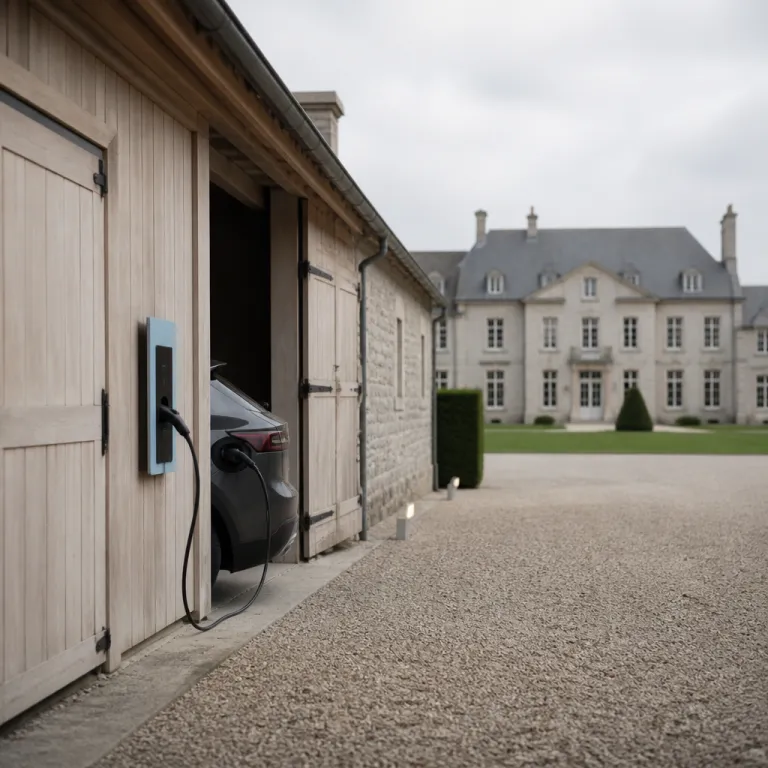
French château owners have become unlikely experts in cable routing, because heritage hotel EV charging in Europe must satisfy both planners and demanding EV drivers. Many château hotels now place electric chargers in former coach yards or behind clipped lime trees, keeping the view from the salon intact while ensuring the electric car is fully charged by breakfast. You might check in through a stone arch, then follow a discreet sign to a gravel car park where a single CCS charging station sits beside a restored barn.
Groups such as Relais & Châteaux show how luxury hotels in historic buildings can integrate charging stations without compromising atmosphere, often using existing outbuildings as small mobility hubs. In these French country estates, hotel charging usually relies on 11 to 22 kilowatt AC chargers, which are ideal for overnight car charging and kinder to older electrical infrastructure than a high power public charging hub. When browsing château hotels online, look for clear wording about the number of charging points, whether the charging station is in a secure park or shared public parking, and if hotel guests must reserve a slot in advance.
One practical tip for couples driving a Tesla or other premium electric vehicles across France is to combine heritage stays with more conventional hotels on long legs of the journey. A refined city property such as a classic townhouse hotel in Florence, profiled in an in depth review of refined EV friendly hotels for electric car travelers, shows how urban hotels can complement château nights in the countryside. Alternate nights in heritage hotel estates and modern city hotels give you a mix of slow, scenic charging and faster, more utilitarian vehicle charging when you need to cover serious distance between ports or airports.
Spanish Paradores: state owned heritage with quietly modern charging
Spain offers one of the clearest examples of heritage hotel EV charging in Europe through the Paradores network, a state backed collection of historic hotels. A Parador is a luxury hotel in Spain, often in a historic building, and many of these properties now integrate electric vehicle charging into castles, monasteries, and palaces. As of the mid 2020s, there are close to one hundred Paradores in Spain, which means a dense grid of potential overnight charging points for an electric car road trip (based on Paradores de Turismo de España corporate publications).
Paradores de Turismo de España has long specialised in adaptive reuse of heritage buildings, so adding charging stations is a natural extension of its conservation work. The group uses restoration techniques and modern amenities integration to bring Wi Fi, heating, and now electric chargers into fragile structures without damaging original stone or timber. For EV drivers, this often translates into a small car park just outside the main walls, where a modest bank of charging points serves hotel guests while keeping heavy vehicle charging hardware away from cloisters and courtyards.
When planning a Spanish itinerary, pair Paradores with other EV ready hotels across continents, using global guides to understand how different regions handle public charging and hotel charging. A useful reference is a comparative overview of where to find EV chargers at hotels across Asia, which highlights how European heritage hotels differ from Asian ryokans or beach resorts in their approach to car charging. In Spain, the emphasis is often on slower AC charging stations that match the relaxed pace of Paradores stays, while fast CCS chargers are more likely to appear at motorway service areas or near major ports and airports.
Bruges and Brugge: medieval streets, quiet chargers, and canal side stays
Few European cities illustrate the tension between preservation and practicality as clearly as Bruges, also known as Brugge, where cobbled streets and gabled house hotel façades leave little room for visible infrastructure. Here, heritage hotel EV charging often means tucking a single charging station into a tiny inner courtyard or at the end of a narrow lane off a quiet side street. The best hotels treat the electric car as part of the service, guiding you to a reserved car park space and managing vehicle charging while you explore the canals.
In the historic centre, parking is scarce and public charging stations can be busy, so staying in a hotel heritage property with guaranteed hotel charging becomes a real advantage. Some hotels maintain a small park hotel style annex outside the pedestrian core, where electric chargers sit beside a landscaped park and are shared between hotel guests and a limited number of public users. Others partner with nearby underground car parks, reserving a cluster of charging points so that each electric vehicle arriving that night has a confirmed charging station.
Names that include words such as “Heritage” or references to historic quarters often signal a classic townhouse or former merchant house that has been carefully modernised, sometimes with hidden charging ports in a rear courtyard. When you read property descriptions, look for explicit references to car charging, electric vehicles, and whether the chargers support CCS, Type 2, or Tesla connectors. If a hotel mentions proximity to Ostend Airport or to regional train stations, check whether they also explain how to reach their car park, because tight medieval streets can make access more complex for an electric car arriving late at night.
From stables to car parks: how heritage estates hide the hardware
Across Europe, the most sophisticated heritage hotel EV charging solutions rarely appear in glossy photos, because the hardware lives where horses once slept. Former stables, carriage houses, and service yards now host neat rows of electric chargers, with cables routed through old feed chutes or along beams that once held tack and harnesses. This approach keeps charging stations close to the main house while preserving sightlines from drawing rooms and terraces.
English country house hotels, Spanish Paradores, and French estates all face the same regulatory maze, from listed building consent to conservation area rules that govern every new cable tray. Owners work with engineers to specify the right type of charging points, often favouring 11 or 22 kilowatt AC chargers that minimise grid impact and allow overnight car charging without noisy cooling fans. Where demand is higher, some estates create a secondary car park near an existing substation, installing a small hub of CCS and Tesla compatible chargers that can support both hotel guests and limited public charging.
For couples planning a long European drive, the practical question is how to string these heritage stays together without range anxiety. One strategy is to use a specialist booking platform that highlights heritage hotel EV charging and cross references it with broader initiatives such as zero cost hotel charging partnerships in other regions, which show how networks can scale. While those American examples focus on modern roadside hotels, the underlying lesson applies in Europe too: the best experience comes when hotel charging is treated as core infrastructure, not a marketing afterthought.
How to read between the lines on EV friendly heritage hotel listings
When you scan booking sites, the phrase “EV charging available” can hide a wide range of realities, especially in historic hotels across Europe. Sometimes it means a single domestic socket in a barn, other times a fully marked car park with multiple charging stations and clear signage. Your task is to decode the listing and understand whether the hotel’s electric vehicle offer matches your expectations.
Start by checking whether the hotel specifies the number and type of charging points, and whether they are reserved for hotel guests or shared with public charging users. A property that lists two CCS chargers, one Tesla compatible unit, and several slower AC points in a secure park hotel style car park is usually taking vehicle charging seriously. If the description only mentions “parking with electric car facilities”, contact the hotel directly and ask whether the charging station is on site, what power level it offers, and whether you need to bring your own cable.
Pay attention to location cues as well, such as distance to the nearest airport, ports, or major station, because these often correlate with higher demand for fast charging. A heritage hotel near Ostend Airport or a busy ferry port might prioritise quicker turnarounds, while a remote house hotel in the countryside can rely on slower overnight car charging. Finally, remember that “Are Paradores expensive?” has the honest answer “Prices vary; some are affordable, others are more luxurious”, and the same holds true for heritage hotels with EV charging — you are paying for both the setting and the certainty that your electric car will be ready for the next leg.
Key figures on heritage hotels and EV charging
- Spain’s Paradores network operates close to one hundred hotels in historic buildings, creating one of Europe’s densest grids of heritage properties that can integrate on site EV charging for touring drivers (based on Paradores de Turismo de España corporate publications).
- Across that network, several thousand rooms are available, which means that even a modest installation of two to four charging points per property could support hundreds of electric vehicles every night across the portfolio (derived from Paradores de Turismo de España public data).
- Roam Charging has reported installing more than one hundred charge points across around twenty Hand Picked Hotels properties in the United Kingdom, many of them country house estates, showing how heritage portfolios can scale EV infrastructure when approached strategically (source: Roam Charging press materials).
- AccorInvest’s partnership with ELECTRA in France targets multiple high power chargers, typically in the 200 to 400 kilowatt range, at each participating hotel, with several dozen charging points already live at a growing number of locations, illustrating how urban and roadside hotels complement slower heritage estate charging (source: AccorInvest and ELECTRA joint announcements).
FAQ about heritage hotels with EV charging in Europe
What is a Parador and why does it matter for EV drivers ?
A Parador is a luxury hotel in Spain, often in a historic building, operated under the Paradores de Turismo de España brand. For EV drivers, Paradores matter because they combine heritage settings with modern amenities, increasingly including on site charging stations. This makes them reliable overnight stops on long electric car journeys across Spain.
How many Paradores can I include on a single EV road trip ?
As of the mid 2020s, there are close to one hundred Paradores in Spain, spread across cities, coasts, and rural areas. In practice, you might include three to six Paradores on a typical two week electric vehicle itinerary, depending on how far you drive between stays. The density of the network allows flexible routing between ports, airports, and inland heritage sites.
Are heritage hotels with EV charging more expensive than regular hotels ?
Prices at heritage hotels vary widely, just as they do at Paradores, where some properties are relatively affordable and others are firmly in the luxury bracket. You often pay a premium for the historic setting, but EV charging itself may be complimentary or billed at a reasonable per kilowatt hour rate. Always check whether hotel charging fees are added to your room bill or handled through a separate charging app.
How can I be sure a heritage hotel’s charger will fit my car ?
Most European heritage hotels now install Type 2 AC connectors and CCS fast chargers, which cover the majority of modern electric vehicles, including Tesla models using the appropriate adapter where required. Before booking, confirm the connector type, power level, and whether the charging station is reserved for hotel guests. If you drive a less common electric car, bring your own cable and verify compatibility with the hotel’s chargers.
What should I ask a heritage hotel before arriving with an EV ?
Contact the hotel and ask how many charging points they have, whether you need to reserve a space, and where the chargers are located in relation to the main house. Clarify the charging speed, connector type, and any fees, and request written confirmation in your booking notes. This ensures that when you arrive, the car park, charging station, and check in process all align with your expectations.