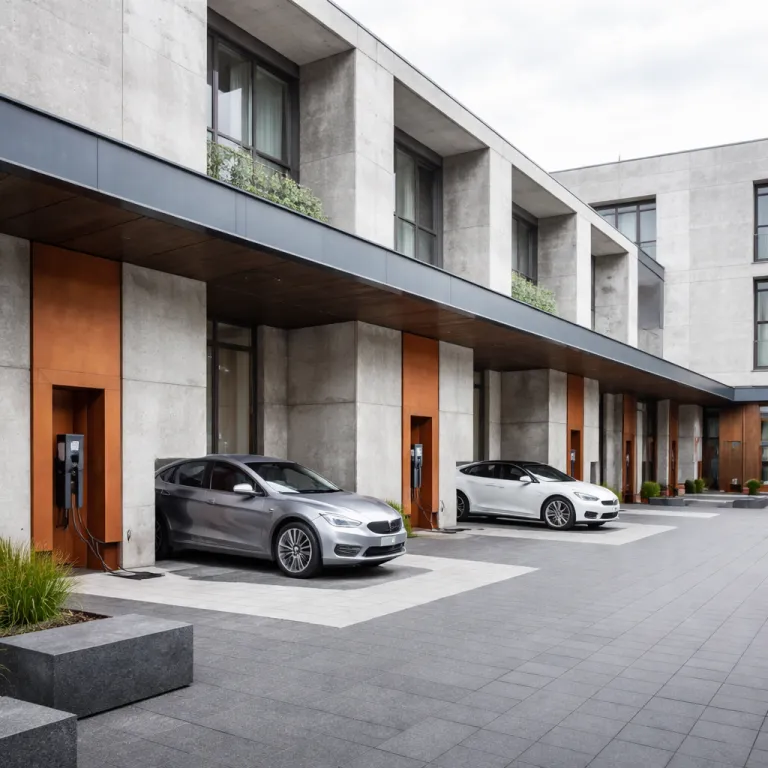
Why EV hotel charger design architecture now defines the luxury arrival
At the best EV focused properties, the way hotel EV chargers are designed now shapes the entire arrival sequence. When a hotel treats its charging stations as part of the architectural language, the equipment stops looking like industrial clutter and starts reading as a hospitality feature that quietly signals care for electric vehicle guests. You feel it the moment you glide into the parking spaces and see a coherent charging layout rather than a lonely metal post buzzing under a floodlight.
Luxury hoteliers have realised that vehicle charging is no longer a fringe amenity but a core mobility service that must be visible, legible and aesthetically resolved. The most forward thinking teams integrate every charging point into the circulation plan, aligning each unit with sightlines from reception and using lighting, paving and planting to provide accessible charging without sacrificing elegance. This is where charging infrastructure becomes part of the brand story, not just an electrical afterthought bolted onto existing supply equipment.
For EV driving couples planning a weekend escape, the design of the charging area now ranks alongside spa access and view categories. They want a system that feels intuitive, with clear charging requirements, well marked parking spaces and a management system that quietly handles charging sessions without fuss. When hotels get this right, the user experience of every electric vehicle guest improves, and the property gains a subtle but powerful edge over competitors that still hide their chargers behind the delivery bay.
From industrial bollard to garden feature: chargers as design elements
The Retreat at Elcot Park in Berkshire shows how carefully planned EV hotel charger design can be both romantic and rigorously functional. Here, custom dual socket AC bays sit within the garden layout, so each charger shares the same stone, planting palette and lighting rhythm as the surrounding paths and terraces. Instead of a harsh metal charging station dropped on tarmac, you find low profile chargers framed by hedges, with charging cables neatly guided so they never dominate the view. The property’s approach has been highlighted in UK hospitality and design press, underlining how considered charger placement can enhance a country house setting.
This approach turns every vehicle charging point into a deliberate architectural gesture that respects both electric vehicles and the landscape. Power pedestals are scaled to nearby walls, the number of chargers is calibrated to around 5 to 10 percent of parking, echoing guidance from several European hotel and workplace mobility studies, and each bay follows accessibility guidelines so that accessible charging is genuinely possible for guests with reduced mobility. The result is a charging infrastructure that feels curated, where the electrical system, lighting and paving work together to provide clear routes between vehicles, chargers and the hotel entrance.
Contrast that with the typical industrial bollard planted at the far edge of anonymous parking spaces, where charging stations sit in darkness and the charging process feels like an afterthought. In those layouts, the technical charging requirements may be met, but the user experience is poor and the layout undermines the hotel’s positioning. Couples choosing a premium stay increasingly notice these details, and they will remember the property where the charging station was framed by lavender and warm stone rather than dumpsters and delivery vans.
Placement, power and the subtle choreography of EV friendly parking
Thoughtful EV hotel charger design architecture starts with a simple question: what does it feel like to arrive, park and plug in after a long drive? The most successful layouts place a carefully chosen number of chargers near reception and landscaped areas, so guests can step from their electric vehicle straight into the lobby without crossing service traffic. This choreography of parking spaces, lighting and wayfinding turns charging into a seamless part of check in rather than a separate chore.
From a technical perspective, hotels must balance power capacity, charging requirements and guest flow when planning their charging infrastructure. Many properties begin by allocating 5 to 10 percent of parking spaces to EV use, a rule of thumb echoed in several hotel development briefs and urban mobility reports, then sizing the electrical system and supply equipment to support a mix of Level 2 chargers and a few DC fast chargers for higher turnover. Where existing electrical capacity is limited, smart management system software can stagger charging sessions, ensuring that all vehicles receive adequate power overnight without costly grid upgrades.
Placement also signals how a hotel values its electric vehicle clientele, because a charging station hidden behind the loading dock sends a very different message from one integrated into the main forecourt. When charging bays occupy prime parking spaces under a canopy or beside a landscaped path, they communicate that vehicle charging is a priority service, not a reluctant add on. For couples arriving late, that visible, accessible charging point near the entrance can be the difference between a relaxed evening and a stressful hunt for power.
Lobby screens, live data and the aesthetics of information
A growing number of design led hotels now extend EV hotel charger design architecture into the lobby itself. Instead of hiding the charging infrastructure in a back office dashboard, they surface live vehicle charging data on discreet screens that sit alongside art, weather and flight information. These displays show which charging stations are in use, estimated completion times and sometimes even the carbon intensity of the current power mix.
Handled well, this information becomes part of the ambient experience rather than a technical intrusion, reinforcing the sense that electric vehicles are fully integrated into the property’s mobility system. A well designed management system can feed real time charger status to these lobby screens, while also tracking the number of chargers in use and forecasting when parking spaces will free up. For guests, the user experience is quietly reassuring: they can enjoy dinner knowing their vehicle charging session is progressing, without repeatedly walking back to the station.
Hotels that embrace this approach often pair it with strong accessibility guidelines and clear signage from reception to every charging station, so that accessible charging is easy to locate and use. The visual language on screen mirrors the charger design outside, using the same icons, colours and typography to create a coherent narrative around charging. As a result, the charging cables, supply equipment and electrical infrastructure fade into the background, while the guest perceives only a calm, well orchestrated system that respects both time and aesthetics.
Design that photographs well and quietly drives bookings
When EV hotel charger design architecture is handled with the same care as a pool deck or bar, it starts to show up in guest photography. Properties that integrate chargers into courtyards, colonnades or garden walls report higher social media sharing from electric vehicle guests, who often frame their cars within the wider station design. Those images travel fast, and they tell a story of charging stations that feel aspirational rather than purely functional.
For a couple planning a road trip, a single photograph of a car plugged into a beautifully lit charging station can be more persuasive than a long list of technical features. It signals that the hotel understands both the emotional and practical sides of electric vehicles, from accessible charging and clear charging requirements to the comfort of arriving at a well considered parking area. On platforms like ev stay, where EV focused travellers compare properties, this kind of visual evidence carries real weight, especially when paired with in depth guides to energy efficient, environmentally certified stays such as the one on energy efficient environmentally certified stays in Tenerife for refined eco conscious travellers at https://www.ev-stay.com/blog/energy-efficient-environmentally-certified-stays-in-tenerife-for-refined-eco-conscious-travellers.
Major chains have already recognised the strategic value of visible, well designed charging infrastructure, with Hilton Hotels and Marriott Hotels both reporting hundreds of properties that list EV charging among their amenities in public directories. Evermore Orlando Resort positions itself as one of the first large scale North American resorts to offer property wide EV charging, where the number of chargers and the layout of parking spaces are integral to the masterplan and highlighted in resort planning materials. For guests, the practical checklist remains the same: confirm charger availability when booking, ask how many chargers are on site, inquire about charging fees and check charger compatibility with your EV, because policies vary; some offer free charging, others charge a fee, and most use standard connectors, but confirm compatibility beforehand.
FAQ
Do all hotels charge a fee for EV charging ?
Policies differ widely between properties, even within the same brand, so you should always ask about charging requirements and pricing when you reserve. Some luxury hotels provide complimentary vehicle charging for overnight guests, while others bill per kilowatt hour or per session at each charging station. Clarifying the cost in advance helps you compare options and decide whether on site charging stations or nearby public chargers best fit your trip.
How can I reliably find hotels with EV chargers ?
The most efficient approach is to combine specialist booking platforms that focus on EV hotel charger design architecture with mainstream hotel search filters. Many large chains such as Hilton Hotels and Marriott Hotels now flag charging stations as a standard amenity, and third party apps like PlugShare map both hotel based chargers and public stations along your route. When you shortlist properties, contact them directly to confirm the number of chargers, connector types and whether parking spaces for electric vehicles can be reserved.
Are hotel EV chargers compatible with all electric vehicles ?
Most hotels install widely used connectors for their chargers, typically Type 2 for AC charging and CCS for DC fast chargers in many regions. However, not every electric vehicle uses the same plug, and some guests may need an adapter to meet their charging requirements. Before you travel, check your vehicle charging manual, confirm the connector types at the charging station and ensure your charging cables and any necessary adapters are packed.
What should I look for in EV friendly hotel design as a guest ?
Focus on how the EV hotel charger design architecture supports your arrival and departure, not just on whether chargers exist. Well designed properties provide clearly signed, well lit parking spaces near reception, accessible charging that follows accessibility guidelines and a visible management system that communicates charger status. If the charging stations feel integrated into the overall design, with safe circulation and convenient access, your user experience will almost always be smoother.
Is it better to have fast chargers or more standard chargers at a hotel ?
For most overnight stays, a larger number of standard AC chargers offers better coverage than a single very powerful unit, because many vehicles can charge simultaneously at moderate power. DC fast chargers are useful for short daytime stops or high turnover properties, but they require more robust electrical infrastructure and careful station design to manage heat, noise and visual impact. As a guest, choose hotels where the mix of chargers matches your itinerary; overnight stays pair well with multiple AC points, while quick stopovers benefit from at least one fast charger in a convenient location.